


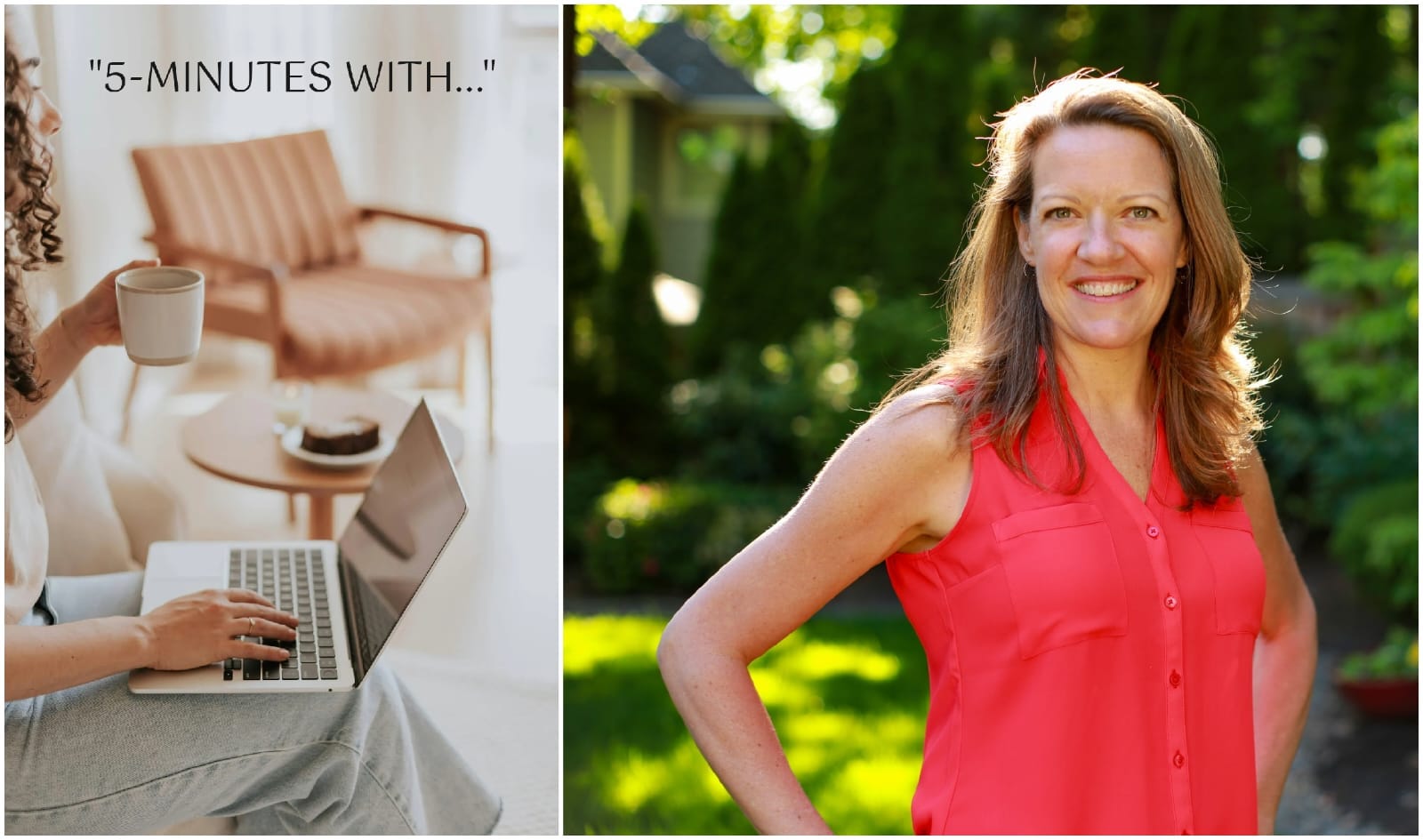
Alison Bame is a Registered Dietitian, Functional Medicine Practitioner, and a woman who has lived through cancer, early menopause, and the quiet, gritty work of rebuilding from the inside out. She’s not in a performative midlife. She’s in a reclamation season: no hustle, no chasing 35, no proving. Just a deep commitment to feeling strong, clear, resilient, and truly at home in her body again. In this ‘5-minutes with…’ conversation, Alison names what so many women feel but rarely hear reflected: that you can look fine on the outside while your internal thermostat, metabolism, and mood feel completely rewired, and that being told it’s just ageing or be grateful you’re alive is not the same as being supported. Her story is both clinical and deeply human, rooted in the truth that survival is not the finish line.

Who are you, and what season of midlife are you in right now?
I’m Alison, a Registered Dietitian, Functional Medicine Practitioner, and a woman who has walked through cancer, early menopause, and the quiet rebuilding that follows both.
I’m in what I’d call the reclamation season of midlife, not trying to prove, not trying to hustle, not trying to look 35 again, but deeply invested in feeling strong, resilient, clear, and at home in my body.
What surprised you most about midlife or menopause?
What surprised me most was how quickly your body can feel unfamiliar. You can look “fine” on the outside, but feel like your internal thermostat, metabolism, and mood control panel have all been rewired: same food, same workouts, different response, and how little guidance there is beyond, “It’s just ageing”, or in my case, “Be happy you are alive.” I am thrilled for every birthday, and that’s not good enough. I want to feel great again.
What’s been the hardest part that people don’t talk about?
The gap between surviving and actually healing. I am profoundly grateful for conventional medicine. It saved my life, but when it came to menopause at 42… to radiation-induced colitis… to adrenals that barely released cortisol… to a liver burdened from chemo and radiation… to autoimmune thyroiditis... There weren’t real tools; there was monitoring, there was symptom management, there was, “This is normal.”
Yes, and that’s not the same as being well. The hardest part was realising I would have to become the student of my own body: healing my gut after radiation damage, learning how to truly support detox pathways, rebuilding liver resilience, restoring nervous system regulation, rebuilding muscle, sleeping with intention, and eating in a way that was not just “healthy” but therapeutic.
No one told me how powerful a lifestyle could be. How strategic sleep, strength training, and nervous system regulation are. How a nutrient-dense, specific diet can heal. How cortisol patterns matter. How blood sugar stability changes everything. The grief wasn’t just losing the body I knew. It was realising survival wasn’t the same as restoration. I didn’t want to just be alive; I wanted to feel strong, clear, whole.
What has helped you most (a habit, a mindset shift, support, HRT or no HRT, community)?
Learning how to truly nourish my unique body, especially after the damage of treatment. Chemo doesn’t just “kill cancer,” it scorches terrain: gut lining, mitochondria, hormone signalling, stress response.
Pulling my body back together led me to train in functional medicine: testing instead of guessing, rebuilding my gut, stabilising blood sugar, strength training to rebuild muscle, protecting sleep like it’s sacred, eating enough protein, managing cortisol, not just calories, and faith.
Midlife has been less about control and more about stewardship: listening when symptoms whisper, responding with care instead of punishment, trusting that God designed the body to heal when we give it the right conditions.
Now I know there is a way through, and I can’t unknow that, which is why I help women who are suffering and don’t know where to turn. We don’t have to suffer. We shouldn’t suffer.
What are you unlearning?
That pushing harder fixes everything. That exhaustion is normal. That’s better. That rest must be earned. I’m unlearning the idea that my body is a project to conquer. It’s a partner. It’s wise. It keeps score. And it responds to how it’s treated.
What do you wish you could tell your 35-year-old self?
Build muscle sooner.
Eat more protein.
Guard your sleep like it’s gold.
Don’t glorify stress.
Don’t fear a healthy weight.
And this: Your body isn’t fragile. But it does keep score. Support it now so it supports you later.
What do you want other women to know they’re not alone in?
Waking up at 3:17 a.m.
Feeling like your waistline changed overnight.
Wondering why what “always worked” suddenly doesn’t.
Feeling strong one day and inflamed the next.
Wondering if this is just how it is now. It’s not, your body is responding to the environment and hormonal shifts it’s in. There is logic to it, and there are solutions.
What’s one small ritual or practice that’s keeping you steady in your daily life?
Morning yoga and prayer before anything else, before the phone, before email, before input, just the breath, stretch, scripture.
Getting outside daily, even if it’s just ten minutes of light on my face, and a pre-bed routine that looks suspiciously like what I used to do for my toddlers: warm bath, good book, lights low, wind down with intention.
Midlife has taught me this: Health isn’t built through dramatic overhauls; it’s built through steady rhythms.
What Alison makes crystal clear is the gap many women fall into after a health crisis or a hormonal shift: you survive, but no one shows you how to restore. And so you become the student of your own body. You learn that symptoms aren’t drama, they’re data. That gut health, blood sugar, cortisol patterns, sleep, strength, and nervous system regulation aren’t wellness trends; they’re foundations. I love the way she reframes midlife as stewardship: listening when symptoms whisper, responding with care instead of punishment, and building health through steady rhythms rather than dramatic overhauls. If you’ve been waking at 3:17 a.m., feeling like your waist changed overnight, or wondering why nothing works the way it used to, let Alison’s words land as reassurance and a challenge: there is logic to what’s happening, and there are solutions. You don’t have to settle for just being alive. You get to feel well.
If you’d like to be part of the ‘5 Minutes With…’ series, or you know a woman whose voice would feel like medicine here, email me at hello@kiransinghuk.com. And if you’re reading this thinking, same, tell me in the comments: what are you unlearning in midlife?
