


Dr Trina Read is a Canadian sexologist and best-selling, award-winning author. She’s 57, married, raising two teenage boys, and a year past her final period, and she describes this season with a word I love: recalibration. Not reinvention. Refinement. Her body has changed, her energy has changed, and even her ambition has changed shape. In this conversation, Trina speaks to the disorienting reality of midlife that can exist even when life looks successful from the outside: the internal wobble, the random anxiety, and the strange blend of feeling confident yet unexpectedly vulnerable. She also names the hardest part with refreshing honesty: the unpredictability of a body that suddenly feels like it’s running its own programme.
Who are you, and what season of midlife are you in right now?
I’m Dr Trina Read, Canadian Sexologist and best-selling, award-winning author. I’m 57, married, raising two teenage boys, and one year past my final period.
This season feels like a recalibration. My body has changed. My energy has changed. Even my ambition has changed shape. I’m no longer reinventing myself; instead, I’m refining.
What surprised you most about midlife or menopause?
How disorienting it can feel, even when your life looks “successful” from the outside. I didn’t expect the internal wobble or the random anxiety. Or those moments of, “Who am I?” I assumed with age came certainty. Instead, there’s been a strange mix of feeling confident yet extremely vulnerable.
What’s been the hardest part that people don’t talk about?
The unpredictability of your body. One day, you feel strong. The next day, something hurts for no clear reason. A rash appears. Your hair thins. Your hips ache. Your sleep disappears. As a Sexologist, I intellectually connect the dots to hormones. Emotionally, it’s still unsettling to feel like your body is completely out of your control.
What has helped you most (a habit, a mindset shift, support, HRT or no HRT, community)?
Community. I started a mastermind for women solopreneurs, and we meet in person every month. Being in a room with women who are building businesses, navigating hormones, parenting, ageing parents, and marriage normalises everything. When one woman says, “Is this happening to you too?” and the group nods, the shame evaporates.
What are you unlearning?
Control disguised as care. I’m unlearning the instinct to smooth the road for my teenage sons. I’m still figuring out where support ends, and coddling begins. I need to let my sons struggle and fail while resisting the urge to rescue.
What do you wish you could tell your 35-year-old self?
You don’t have to grip life so tightly. I was so driven. So serious. So focused on proving myself. I wish I’d trusted that things would unfold at the perfect time. That success is hollow if you don’t know how to push yourself away from your desk and go out to enjoy a slow Tuesday afternoon.
What do you want other women to know they’re not alone in?
Feeling insecure in a body that suddenly feels unfamiliar. As a Sexologist, I see how many women quietly worry that their changing bodies will make them less desirable. The bloating. The dryness. The weight “redistribution.” The drop in libido. We assume we’re the only ones. We’re not. Almost every woman I speak to is negotiating that same body shame. Most are doing it in silence.
What’s one small ritual or practice that’s keeping you steady in your daily life?
Meditation. Fifteen to twenty minutes every morning for over a decade. It doesn’t make life perfect. It makes me less reactive. It gives me space between a hormonal wave and a decision. In this chapter, that pause has become everything.
What I appreciate most about Trina’s answers is the blend of expertise and humanity. She can connect the dots intellectually because she understands hormones for a living, and she still admits how emotionally unsettling it can be when sleep disappears, joints ache, hair thins, and your body feels out of your control. Her reminder about body shame is especially important: so many women quietly worry they’ll be less desirable as their bodies change, and most are carrying that fear in silence. Trina’s antidote is simple and powerful: a community that normalises, and a daily meditation practice that creates space between a hormonal wave and a decision. That pause, she says, becomes everything, and you can feel why. Add in her honesty about unlearning control disguised as care, especially with teenage sons, and this interview lands like a permission slip: you don’t have to grip life so tightly to be safe. This chapter can be softer, steadier, and more true, and you’re not alone in any of it.
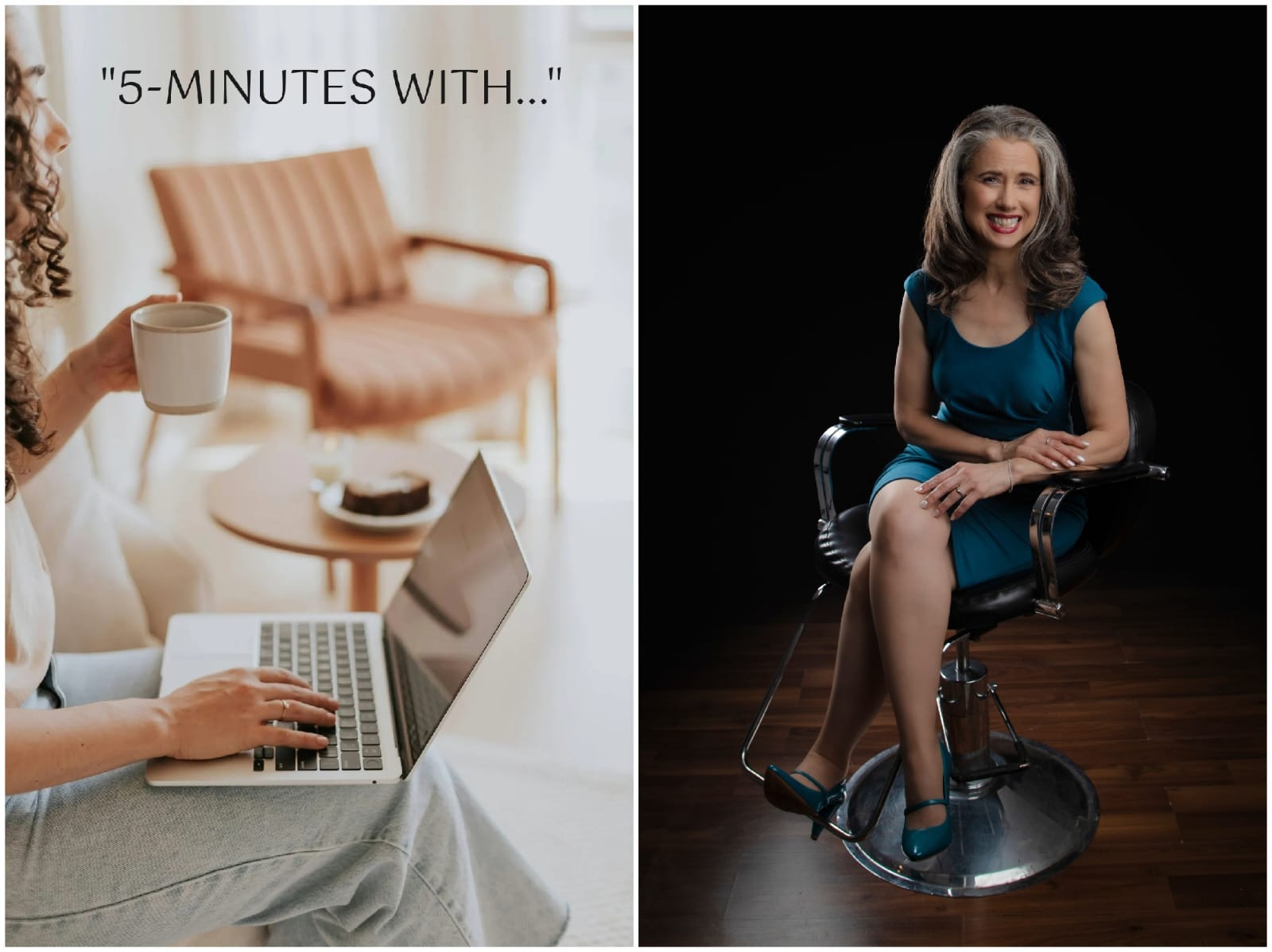
If you’d like to be part of the ‘5 Minutes With…’ series, or you know a woman whose voice would feel like medicine here, email me at hello@kiransinghuk.com. And if you’re reading this thinking, same, tell me in the comments: what are you unlearning in midlife?

There are so many parts of this interview that resonated with me. The older I get, the more sensual, passionate, appreciative, and deeply in love with myself I become—not in a selfish way, but in the healthiest form of self-love.
This midlife version of me is the woman I wish I had known in my 20s and 30s. She’s wiser, softer, stronger, more self-aware… and honestly, a lot cooler.
But then again, maybe I wouldn’t have fully appreciated her back then. Some versions of ourselves can only be understood after we’ve lived enough life to become them.