

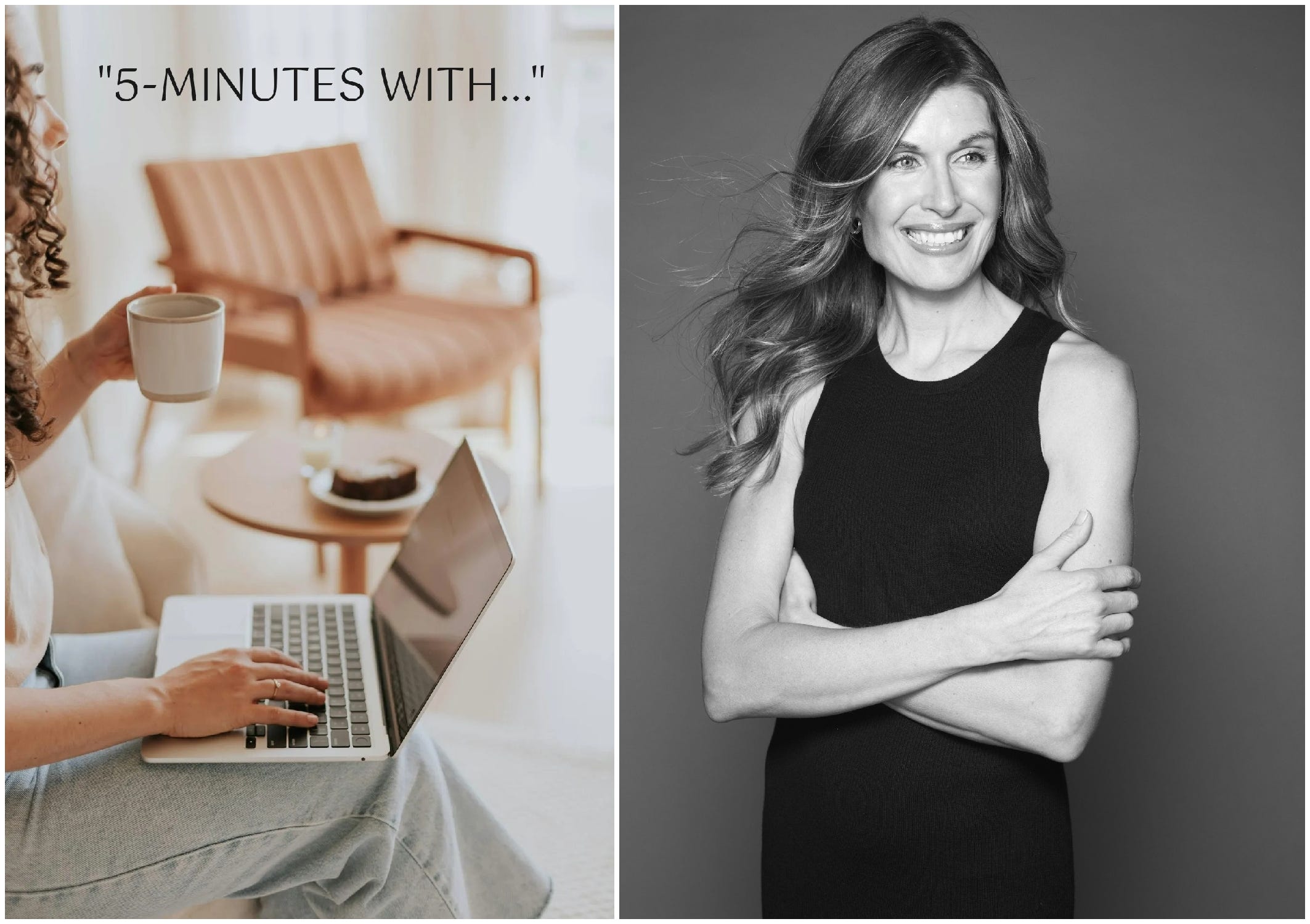
Jessica Corwin is a registered dietitian, women’s health coach, mum of three, and a few years into perimenopause, which means she’s living the work as much as she’s teaching it. She supports women through this transition all day, then goes home and navigates the same shifting ground herself. In this conversation, Jessica names what so many women feel but struggle to explain: how random and unnerving early symptoms can be, how often we’re dismissed as too young or too stressed, and how deeply biological this season actually is. She speaks with clarity about inflammation, weight changes, blood sugar shifts, and the increased likelihood of autoimmune diagnosis during this window, and she offers a more compassionate, more intelligent way through: boundaries, nourishment, community, and grace.
Who are you, and what season of midlife are you in right now?
I’m Jessica, a registered dietitian, women’s health coach, mom of three, and someone a few years into perimenopause. I spend my days supporting women through this transition, and then I come home and live it myself. It’s humbling in the best way.
I’m in that season where things still mostly work… but not the way they used to. It’s subtle some days. Loud on others.
What surprised you most about midlife or menopause?
How random it felt at first. No one talks about the early symptoms, the nerve pain and numbness, the irritability that feels disproportionate, the insomnia that stretches into month four, the flashes of rage, the forgetfulness that makes you question yourself.
And if you’re on the younger end, the dismissal. Being told you’re “too young” or that it’s just stress. Gosh, when you are crazy stressed and told just to relax. How do you think that lands?
What also surprised me is how physiological this all is. As estradiol declines, inflammation rises. Weight begins to creep even when nothing changes. Cholesterol and blood sugar can shift. Women are more likely to be diagnosed with an autoimmune condition during this window.
It’s not in our heads. It’s biology. But no one hands you that memo.
What’s been the hardest part that people don’t talk about?
The identity shift. I’ve always been competitive. Driven. Hustle culture made sense to me. I wanted to win, to be the best, to do all the courses, strength train every morning, and show up at 100 per cent.
But after being diagnosed with an autoimmune condition, my window of stress tolerance already narrowed. Layer perimenopause on top of that, and the window shrank even more.
No one talks about how much midlife asks you to slow down, not because you’re weak, but because your body demands boundaries. She’s seeking support and new ways. Our old strategies are no longer effective. So get that old mantra of eat last move more out of your head. And, it’s grieving who you used to be while learning who you are becoming.
What has helped you most?
Community. Without question. I’m fortunate to work in this space, so I get to learn from women ahead of me while supporting those behind me. That creates this beautiful bridge; we remind each other we’re not crazy. We laugh about wanting to burst into tears because someone is chewing too loudly. We validate each other when insomnia makes us feel unhinged.
Practically, nourishing my body consistently has helped. Prioritising protein. Protecting sleep. Getting outside. Forest bathing. Laughing often.
Oral micronised progesterone has helped tremendously with sleep and nervous system steadiness. And a lot of grace. A deep, ongoing practice of grace.
What are you unlearning?
Hustle and diet culture. I used to believe that if I couldn’t work out for 60 minutes, it didn’t count. If I couldn’t complete my full morning routine, I had failed.
Now I use what I call the accordion theory. Some days I can expand, gratitude, journaling or meditation, a little education, half-caff coffee with soy milk or protein, and strength training. Other days, I need to shrink it down, a short inspirational reading with my coffee and ten minutes of movement. Ten minutes count. Listening counts. Midlife is teaching me flexibility. Not all-or-nothing.
What do you wish you could tell your 35-year-old self?
Changes are coming. They are hormonal. Don’t be afraid. Set boundaries earlier. Protect your stress load. Women with autoimmune conditions are more likely to enter perimenopause earlier. You are not broken. You are shifting. And I would tell her to start building community sooner. You don’t have to muscle through everything alone.
What do you want other women to know they’re not alone in?
The confusion. The feeling of not recognising yourself. The way your body can feel foreign some days. The frustration of trying supplement after supplement because the internet told you to.
There is so much hype and misinformation out there. So many people are eager to sell something to women in this vulnerable window. Find a practitioner you trust. Get educated. Make decisions from clarity, not fear.
And understand that bioidentical hormone therapy addresses symptoms at the root hormonal level. For many women, it is far more effective than stacks of supplements.
You are not weak. You are not dramatic. You are not alone.
What’s one small ritual or practice that’s keeping you steady in your daily life?
Conversations with friends who get it. A supportive husband. Time in nature. Fresh air resets me faster than almost anything. It reminds me that seasons change. Bodies change. And that change is not the same thing as decline. Midlife isn’t the end of something. It’s the refinement of everything.
What I love about Jessica’s perspective is that it removes the shame. The brain fog, the rage, the insomnia, the confusion, the feeling like your body has become a stranger, none of it is a personal failing. It’s a physiology meeting a life that’s often already full. Her story is also a quiet invitation to release the old midlife reflex of trying harder: more discipline, more workouts, more restriction, more supplements, more pushing. Instead, she offers flexibility with what she calls the accordion theory: some days you expand, some days you shrink, and both count. She reminds us to find a practitioner we trust, to make decisions from clarity, not fear, and to lean on community because muscling through alone is not a badge of honour. Midlife isn’t decline, she says. It’s refinement. And honestly, that’s exactly what this conversation feels like.
If you’d like to be part of the ‘5 Minutes With…’ series, or you know a woman whose voice would feel like medicine here, email me at hello@kiransinghuk.com. And if you’re reading this thinking, same, tell me in the comments: what are you unlearning in midlife?