

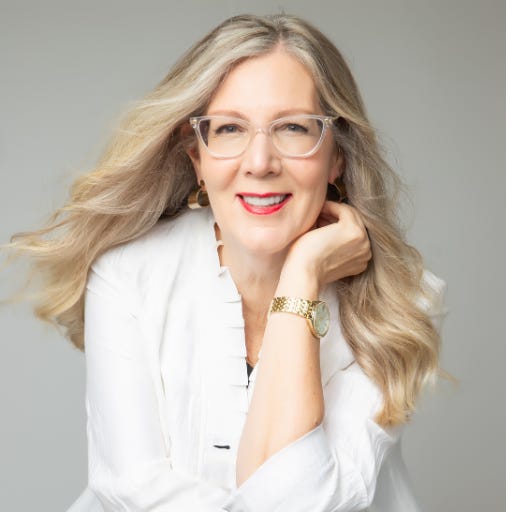
Linda Cooper is a writer, guide, and what she beautifully calls a story midwife: someone who helps women make sense of what midlife awakens in them. She’s the author of When EVERYTHING Changes: The Midlife Collision of Body and Life, as well as The Conscious Coach, and the founder of The Legacy Writer’s Studio, where she helps people turn lived experience into meaningful books. What stands out immediately in Linda’s work is the way she gives language to something many women feel but struggle to name: that midlife is not just a physical transition, but a profound inner reorganisation. Now post-menopausal and on the other side of many of the great upheavals this chapter can bring, Linda writes and guides from a place of earned wisdom. In this conversation, she speaks with depth and compassion about loneliness, identity shifts, emotional responsibility, and the threshold many women mistake for falling apart when, in truth, something wiser may be trying to emerge.
Who are you, and what season of midlife are you in right now?
I’m Linda Cooper, a writer, guide, and what I often call a story midwife, someone who has spent the last decade trying to make sense of what midlife awakens in a woman.
I’m the author of When EVERYTHING Changes: The Midlife Collision of Body and Life, a book about the profound convergence of menopause and life transitions many women experience in midlife, and The Conscious Coach, which explores how women can turn their lived experience into meaningful work guiding others.
I’m also the founder of the Legacy Writer’s Studio, where I help people turn their life experiences into meaningful books. I’ve come to believe that our stories carry wisdom we don’t always recognise until we look back and mine the gold to make sense of them.
Personally, I’m a mother of three grown children and grandmother to a beautiful granddaughter, who reminds me that the way we, as women, live our lives now becomes part of the story the next generation learns about what a woman’s life can be.
As for my own season of midlife, I would say I’m on the other side of the great upheaval. I’m post-menopause now, and I’ve moved through many of the transitions that can shake a woman’s life: identity shifts, relationship changes, losses, and the question that eventually arises… who am I now?
I’m not finished evolving, none of us ever are, but I’m far enough along the path to see the shape of it. And that’s the place I write and guide from now, helping women understand that what feels like everything falling apart in midlife is often the beginning of something wiser trying to emerge. It’s the heart of what I call the Rise Wise philosophy.
What surprised you most about midlife or menopause?
Honestly, how unprepared I was. The extent of the conversation most of us received was fairly simple: after a year without a period, you’re officially in menopause, and there may be some hot flashes along the way. What I wasn’t prepared for at all was the psychological and emotional shift that came with it.
No one had ever connected those dots for me. There was no conversation about how a profound biological transition might also reorganise your inner life, how the way you think, feel, and relate to the world can begin to shift as well.
For a while, I honestly thought something was wrong with me. I didn’t realise that the restlessness I felt, the questioning, the sense that parts of my life no longer fit the way they once had, might actually be part of the same transition.
Looking back now, it seems obvious. When a woman moves through such a significant biological shift, it makes sense that it would ripple through the rest of her life, too. But at the time, there was no language for it. And I think many women are still navigating that part alone, trying to make sense of changes that are far deeper than the physical symptoms we’re usually told about.
What’s been the hardest part that people don’t talk about?
I think one of the hardest parts is the loneliness that can come with it.
Not necessarily the loneliness of being alone, but the loneliness of feeling like the person you used to be is dissolving while the world around you continues as if nothing has changed.
From the outside, life may look exactly the same. You’re still showing up for work, family, and responsibilities. But internally, something is shifting, and it can be difficult to explain that to the people around you, especially if they aren’t experiencing it themselves.
Many women reach this stage and begin questioning parts of their lives they had long accepted: relationships, roles they’ve played for decades, the expectations they’ve carried. That kind of inner reckoning can feel incredibly disorienting.
Another part that isn’t talked about enough is how much emotional responsibility women often carry in relationships. For many of us, we’ve spent years being the stabiliser, the one who smooths things over, holds everything together, takes care of everyone else’s emotional needs. Midlife has a way of bringing that pattern into the light.
You begin to realise how exhausting it is to carry the emotional weight of an entire household or relationship. And when you start stepping back from that role, even a little, it can create tension and confusion because the system everyone is used to suddenly starts changing. That’s a difficult moment.
But it’s also an important one, because it’s often the beginning of learning how to live and relate to others from a more honest and sustainable place.
What has helped you most (a habit, a mindset shift, support, HRT or no HRT, community)?
The single biggest shift for me was understanding that midlife is not just something to get through, it’s a developmental stage of life.
We tend to think of growth as something that happens when we’re young. Childhood, adolescence, early adulthood. But no one really explains that midlife can be another profound period of psychological and emotional development.
Once I began to see it that way, everything started to make more sense. The questioning, the restlessness, the desire to look more honestly at the life I had built. Instead of seeing those feelings as something going wrong, I began to see them as signals that something inside me was trying to evolve.
Writing also became incredibly important during this time.
It gave me a way to slow down the noise in my mind and begin listening more carefully to what I was actually feeling and thinking. Over time, it helped me develop a deeper inner dialogue with myself, something many of us never really learn to cultivate earlier in life.
And perhaps most importantly, hearing other women speak honestly about their experiences helped enormously. When we start sharing these conversations openly, something powerful happens. We begin to realise that what felt confusing or isolating is actually part of a much larger human experience.
Midlife can feel like everything is coming apart. But when you understand what’s happening, it can also become the beginning of a much wiser and more intentional way of living.
What are you unlearning?
Midlife has asked me to unlearn quite a lot. For me, it meant going back to the beginning and questioning many of the beliefs and patterns I had been living inside of for most of my life. I started asking myself where certain assumptions about relationships, responsibility, and even my role in the world had actually come from.
Some of it was familial. Some of it was societal. Some of it was simply the coping mechanisms I had developed earlier in life that helped me navigate difficult situations.
Those strategies served me at one point. But what helps us survive one chapter of life can begin to limit us in the next.
So a lot of my midlife journey involved a kind of reflective process, what many people now call shadow work, where I began looking honestly at my reactions, my patterns, and the roles I had unconsciously taken on in relationships.
It meant recognising parts of myself that were shaped by conditioning rather than conscious choice.
Midlife can be a pivotal moment where you realise you are being redefined. And for me, that meant becoming very intentional about what I was willing to carry forward into the next chapter of my life, and what I was ready to leave behind.
Because some parts of ourselves were never really ours to begin with.
What do you wish you could tell your 35-year-old self?
More than anything, I think I would want her to feel safe enough within herself to speak her truth.
At thirty-five, I was doing what so many women do. I was trying to hold everything together. I was meeting expectations, being responsible, taking care of the people and roles that mattered to me. From the outside, life looked stable and successful.
But inside, there were parts of me that were still small, still cautious about saying what I really felt or needed. I would want her to know that her voice matters more than she realises.
So many of us grow up learning to be agreeable, accommodating, careful not to disrupt the harmony around us. We become very skilled at adapting, smoothing things over, and carrying emotional responsibility for the people around us. And while those qualities can come from a place of love, they can also slowly lead us away from ourselves.
If I could speak to her now, I would encourage her to rise more fully into herself, to trust her instincts, to stop hiding parts of who she is, and to understand that speaking honestly does not make her difficult or selfish.
At the same time, I would hold a great deal of compassion for the woman she was then. She was doing the best she could with what she knew at the time. Most of us are.
Finding your voice is not something that happens all at once. It unfolds over years of living, learning, and sometimes losing the certainty you once held. But when a woman finally begins to speak from the truth of who she is, something powerful shifts, not only in her life, but in the lives of the people around her.
What do you want other women to know they’re not alone in?
I would want women to know they’re not alone in that strange in-between season that can arrive in midlife. There often comes a time when you realise you are no longer the person you once were, but you are not yet fully the woman you are becoming. The roles and identities that once shaped your life begin to shift, motherhood changes as children grow, relationships evolve, careers are questioned, and even your relationship with your own body changes. For a while, it can leave you feeling untethered, as though the ground beneath your feet is rearranging itself.
It can feel disorienting, even frightening at times, because we are used to defining ourselves through the roles we occupy and the structures that have guided our lives. When those structures begin to loosen, we can mistake that feeling for being lost.
But what I have come to understand is that this in-between space is not emptiness. It is a threshold. It is the moment before something new takes shape.
In many ways, it reminds me of the moment when a baby is held before being born into the light. There is a pause there, a sacred, unseen period of becoming where everything is changing beneath the surface, even though the new life has not yet fully emerged.
And I think many women in midlife find themselves standing in that same place, waiting, changing, gathering the courage to step into the next version of themselves.
If a woman finds herself there, feeling uncertain or ungrounded, I would want her to know that she isn’t alone. She is simply in the middle of being reborn.
What’s one small ritual or practice that’s keeping you steady in your daily life?
For me, it’s less a specific ritual and more a perspective that I return to again and again.
Over the years, I’ve come to see my life through a much deeper lens. I believe I’m a soul having a human experience, and that belief has changed how I relate to the challenges and transitions life inevitably brings.
Instead of seeing difficult moments as things that are happening to me, I try to look at them with curiosity and ask what they might be inviting me to learn or become. In many ways, I’ve begun observing my life from a higher perspective, noticing the patterns, the lessons, and the ways certain experiences seem to call me toward growth.
This perspective has been incredibly steadying.
Midlife has especially asked me to expand, to question old assumptions, to practice courage, to let go of identities that no longer fit, and to step into a more honest version of myself. When I look at those moments through a spiritual lens, they stop feeling like disruptions and start looking more like invitations.
That way of seeing the world has become the foundation of how I move through my days now. It reminds me that even the difficult chapters of life can be part of a larger unfolding, one that is continually asking us to grow wiser, more conscious, and more fully ourselves.
What I love about Linda’s perspective is that she doesn’t reduce midlife to a problem to solve. She sees it as a developmental stage, a threshold, a sacred becoming. That reframing alone is powerful, because when you understand that the questioning, restlessness, grief, and untethering are not signs that something is wrong but signals that something inside you is evolving, everything begins to soften.
She also names with such clarity the loneliness of this season, not necessarily being alone, but feeling like the woman you once were is dissolving while the world around you carries on as normal. And for so many women, that coincides with the exhausting realisation of just how much emotional responsibility they’ve been carrying in relationships for years. Linda’s wisdom is an invitation to step back, reflect, and become more conscious about what is truly yours to carry forward, and what was never really yours to begin with.
Her image of midlife as a kind of rebirth stays with you; not empty, not lost, but a threshold, a pause before something new emerges into the light. If you’re in that strange in-between, no longer who you were, not yet fully who you’re becoming, Linda’s words are a steady reminder: you are not broken, and you are not alone. You may simply be in the middle of becoming wiser, more conscious, and more fully yourself.
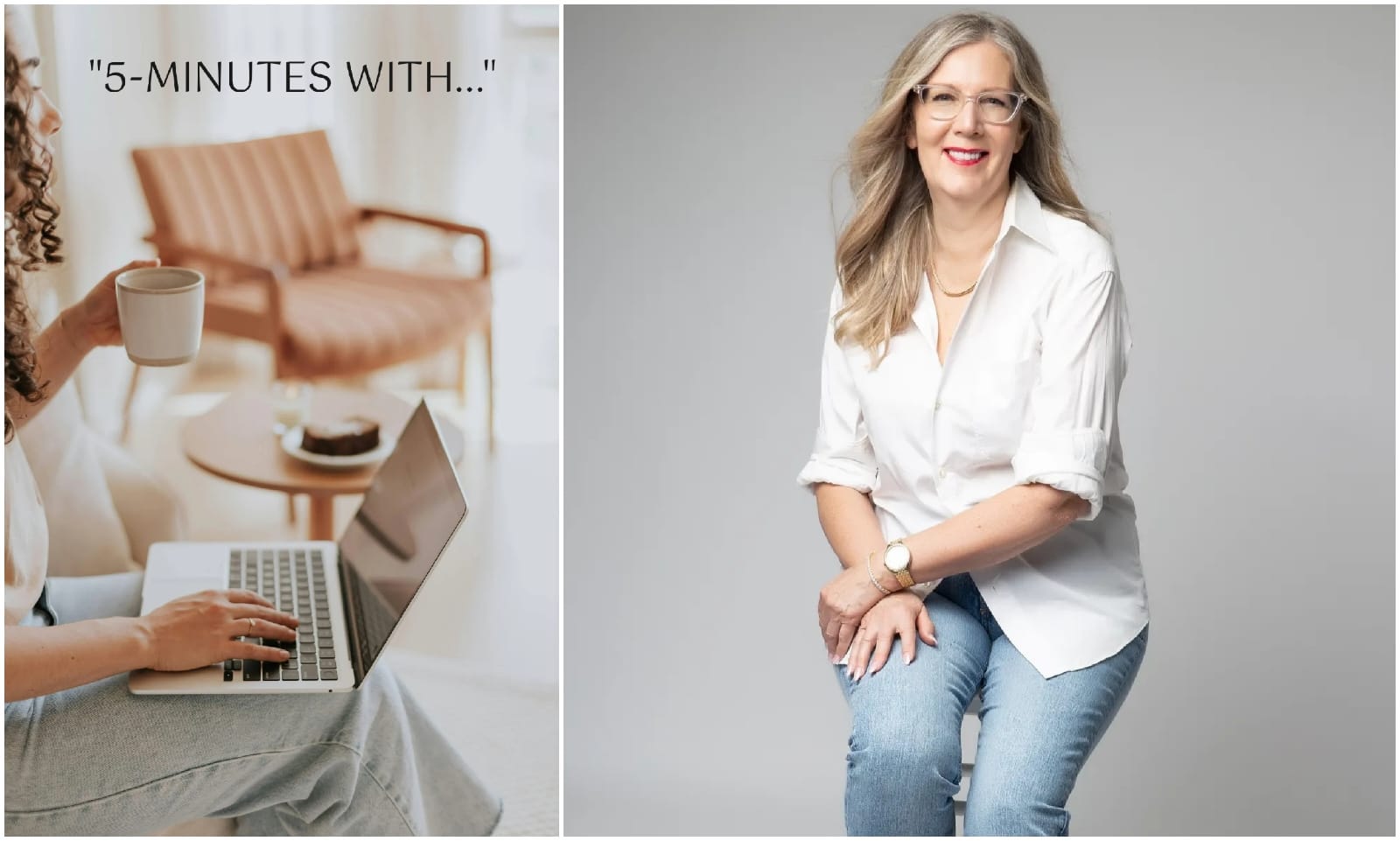
If you’d like to be part of the ‘5 Minutes With…’ series, or you know a woman whose voice would feel like medicine here, email me at hello@kiransinghuk.com. And if you’re reading this thinking, same, tell me in the comments: what are you unlearning in midlife?