

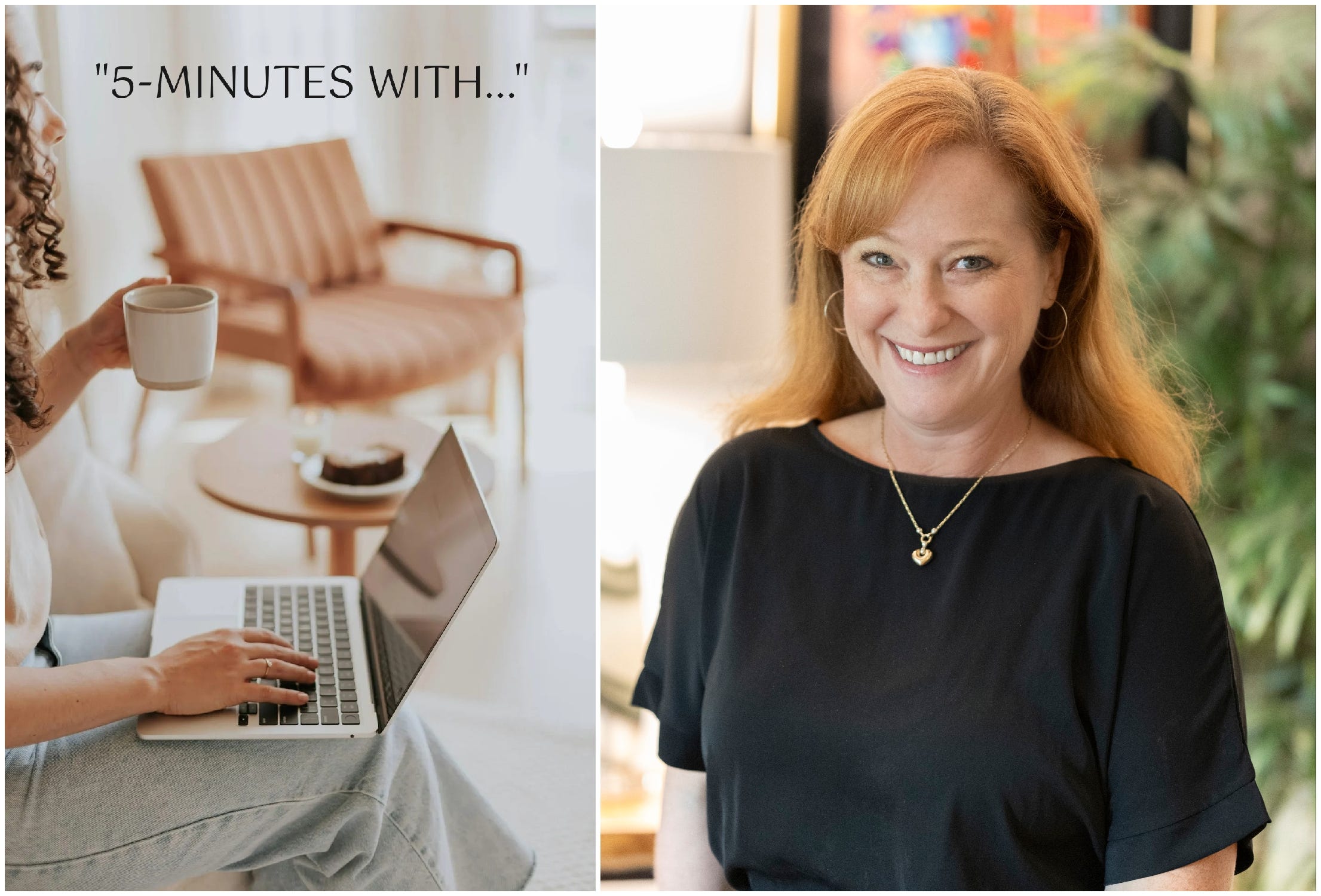
Liz Benditt doesn’t do platitudes. She’s a six-time cancer survivor, founder of The Balm Box, mum of two, and a woman who has rebuilt her body and identity more times than most of us can comprehend. In this season of midlife, she’s not interested in bouncing back. She’s interested in reclamation. With humour. With power. With a very clear sense of what matters now. In this conversation, Liz speaks about the emotional whiplash of menopause, the grief and gratitude that can coexist in the same breath, and what it means to come home to a body that has carried you through the unimaginable and is still, quietly, fiercely capable.
Who are you, and what season of midlife are you in right now?
I’m Liz, a six-time cancer survivor, founder of The Balm Box, mom of two incredible kids, and someone who has rebuilt her body and identity more times than feels statistically reasonable.
This season of midlife feels like reclamation. My kids are grown. My body has scars that tell stories. I’ve stopped trying to “bounce back.” I’m much more interested in moving forward, with power, with humour, and with zero tolerance for nonsense.
What surprised you most about midlife or menopause?
The emotional whiplash. After years of fighting cancer, I thought, “Oh, please. I can handle hot flashes.” But menopause isn’t just physical. It’s this strange shedding. Of estrogen, yes, but also of roles, expectations, and people-pleasing.
What surprised me most is how clear it is. You wake up one day and realise: I do not have time for things that drain me. Illness already taught me that. Menopause just underlined it in Sharpie.
What’s been the hardest part that people don’t talk about?
The identity shift. When you’ve had cancer repeatedly, your body already feels unpredictable. Layer menopause on top of that, and you can feel like a stranger to yourself. Sleep changes. Libido changes. Energy changes.
No one really talks about grieving the body you used to have, while also being profoundly grateful you’re still here. That emotional contradiction is real.
What has helped you most (a habit, a mindset shift, support, HRT or no HRT, community)?
Training for and completing a half-marathon in 2025 changed everything for me. Not because I needed to prove anything, I’ve proven plenty to myself, but because sticking to a training schedule reminded me that my body is still capable. It may be different. It may be scarred. But it is strong.
Community has also been everything. Cancer pushed me to create The Balm Box because I was tired of seeing women receive pink-ribbon platitudes instead of real support. That same instinct carries me now: we do better when we show up honestly for each other.
Midlife is lighter when you’re not pretending.
What are you unlearning?
I am unlearning the idea that my worth is tied to productivity. Illness forces you to rest. Menopause sometimes forces you to rest. For a long time, I fought that. Now I’m trying to see rest as a strategy, not a weakness.
I’m also unlearning the reflex to minimise what I’ve been through. Six cancers. Multiple surgeries. Years of treatment. That’s not a footnote, that’s resilience.
What do you wish you could tell your 35-year-old self?
You don’t have to earn your rest. You don’t have to look perfect to be powerful. And the things that feel catastrophic right now? They will one day become the very tools you use to build something meaningful. Also, start lifting weights earlier.
What do you want other women to know they’re not alone in?
The exhaustion. The rage that shows up out of nowhere. The quiet grief. The feeling of looking in the mirror and thinking, “Who is she?”
If you’ve survived cancer, or caregiving, or corporate life, or motherhood, midlife can feel like the moment it all lands at once. You are not broken. You are metabolising decades. And you deserve real support, not slogans.
What’s one small ritual or practice that’s keeping you steady in your daily life?
Weekend runs with my girlfriends, the “Squishes”, followed by gossip and coffee. After everything my body has endured, radiation, surgeries, and menopause, the simple act of putting one foot in front of the other feels radical. It’s a quiet reminder: I am still here, surrounded by my community. And there is still work, meaningful, heart-centred work, to do.
What I love about Liz is that she tells the truth without making it bleak. She names the rage, the exhaustion, the identity wobble, and then she anchors it in something sturdier: community, movement, meaning, and a refusal to shrink what she’s survived. Her reminder that midlife is lighter when you’re not pretending feels like the whole point of this series. You don’t need slogans. You need support that’s real, women who get it, and a life that honours what your body has carried and what your heart still wants. And sometimes, it really is as simple and radical as putting one foot in front of the other, then grabbing coffee with the people who help you remember you’re still here.
If you’d like to be part of the ‘5 Minutes With…’ series, or you know a woman whose voice would feel like medicine here, email me at hello@kiransinghuk.com. And if you’re reading this thinking, same, tell me in the comments: what are you unlearning in midlife?