


Marc Dupont doesn’t do neat labels and honestly, thank God for that. He’s a French Canadian strategist and writer, an endurance triathlete and hiker, a foodie and sommelier, a traveller, a father, a husband, and the human to Rocket the dog. Work is still demanding. He’s still ambitious. He still competes hard. But he’s in a season where proving matters less than being unmistakably honest about what he values and how he wants to live. In this conversation, Marc shares what midlife has asked of him physically and emotionally: a softer, more durable respect for the body, a deep commitment to self-inquiry, and what he calls integration, not performative softness, but wholeness. Competitive without being consumed. Emotionally available and decisive. Protective without being possessive. The slow undoing of performance as a survival strategy.
Who are you, and what season of midlife are you in right now (work, health, family, identity)?
I’ve never liked reductionist labels. So I suppose you could say I’m a French Canadian strategist, writer, endurance triathlete, hiker, foodie, sommelier, traveller, father, husband and training partner and human to our sweet dog Rocket. All of the above. None of it is quite sufficient on its own.
Work is still demanding. I’m still ambitious. I compete hard. But now I’m less interested in proving myself and more interested in being unmistakably honest with others and about what I value.
Physical health? I still push. But I no longer bully my body into denial when it asks for rest. Injuries take longer to heal. Prescriptions have joined the routine. The illusion of endless vitality has faded, replaced by something softer but more durable: respect. Something I try to give myself and that I am slowly getting better at.
Identity-wise, I suppose you could say I’m in a season of integration. Not softness for softness’ sake, though. Not aesthetic gentleness. Wholeness. Emotionally available and decisive. Protective without being possessive. Competitive without being consumed. If that makes any sense?
A lot of my recent writing, including a book I finished and a long series on fear and armour, has been my way of staying close to that work. The slow undoing of performance as a survival strategy.
Throughout my life, curiosity has probably been my secret weapon. I have always questioned things and wanted to learn and grow. Even as a younger man, when something about the script felt off, I pulled at it. That curiosity is what allowed me to see the mask at all.
My daughter tells me that even as I enter my sixties, I am still learning. That may be the thing I’m proudest of. Not the races. Not the titles. Not the roles. The willingness to keep growing, even when growth exposes you.
What surprised you most about getting older and being a man in midlife?
How quickly it happened! As all of us our age know too well. One day, you still feel like yourself, but you notice the world has started reading you differently. Ageism slips in casually. You’re no longer the young promise. You’re the experienced one. or just the older one. It starts when people in the grocery store start calling you sir and you almost get offended. Now people start asking when you are retiring (I preferred being called sir).
But the bigger surprise was internal.
I expected a decline. What I didn’t expect was this: the more I let go of the need to be liked, to be right, to be impressive, the stronger I became. Not louder. Not harder. Stronger in the sense of being less reactive. Less easily pulled off centre. Less dependent on applause.
I guess you could say that midlife didn’t so much make me softer, as much as it made me harder to hide. That was not AI prose by the way, I cam sup with that myself :-)
There was relief in that, by the way. When the mask drops, you feel exposed at first. But you also feel real. As James Hollis calls it, you enter the middle passage. Something no longer feels quite right. Something more honest insists on being lived. You start feeling that pull, that of returning to the real you. You don’t quite have words for it; it’s more like an inner voice. Who you were before you started playing social roles and wearing masks. For me, it was that kid in me that came back to take his place.
What’s been the hardest part that men rarely say out loud?
Feeling insecure and afraid, basically fear. I don’t mean dramatic fear. More like the fear of being irrelevant, no longer being admired, or not being needed in the way we once were, of discovering that some of what we called strength was actually a coping mechanism.
Many of us were handed a narrow definition of manhood and told to defend it. Questioning can feel like betrayal. Expanding it can feel like weakness. So when the culture shifts, or when our partners grow, or when our children leave the nest, it can feel less like progress and more like diminishment.
That loss, if we don’t examine it, ferments. And what often ferments comes out as anger.
While fear might explain insecure behaviour, I’m not proposing it excuses it. But if we don’t name it, it keeps “running the show” as I often say.
If a man feels threatened by your growth, it may not be because you are shrinking him. It may be because he is confronting a fear he has never examined, that he was only ever lovable when he wasn’t really himself. That doesn’t mean you should shrink to protect him. Expressing boundaries is important, but insufficient. It just means the work is his to do.
The hardest part for me wasn’t removing the mask. It was admitting I had built parts of my identity around not being rejected in the first place.
What has helped you most?
Disciplined self-inquiry and disciplined practice.
Writing forces honesty. Physical endurance training through sports does too. You can’t bluff a long run, let alone an Ironman race. Effort exposes what’s actually there. For years, I used intensity as proof. Now I use it as information.
And then there’s gratitude. Not as a mood, but more as a kind of training.
Every night before sleep, I think of five things that happened that day for which I’m grateful. Every morning before getting up, I think of five things in my life I’m grateful for. It takes less than a minute. It sounds simple. It isn’t.
It rewires attention. More than that, it literally rewires the brain.
The brain strengthens what it rehearses. If I rehearse resentment or scarcity, those pathways deepen. If I rehearse sufficiency and appreciation, something steadier forms. Gratitude doesn’t eliminate fear, but for me at least, it reduces how quickly I default to defensiveness.
It’s not sentimental. It’s neurological. And moral, even. It reminds me I have enough, that I am enough, even when I’m not performing.
So I guess you could say that for me, midlife hasn’t so much been a crisis as a kind of reckoning. A slow realisation that some of what I called “me” was actually adaptation. A mask I didn’t know I was wearing until the day I felt it slip off.
So I would have to add that therapy in my 40s helped with that. A lot. It helped me deal with mental injuries, just like physical therapy helped with my physical injuries (there were a lot of those, too).
What are you unlearning about masculinity, success, or what it means to be a good man?
I don’t think masculinity needs to be dismantled. If I can be blunt here for a second, I’d say this: “I think it needs to grow up.”
I don’t believe growth means swinging to the opposite stereotype and putting on a different costume. It isn’t about trading in boots for beads, a military buzz cut for a man bun, or loud certainty for soft-spoken new-age performance. Not that there’s anything remotely wrong with any of that. What I mean is that it’s not so much about becoming decorative or gentle in tone that signals evolution, or deliberatively adopting what we once labelled as traditionally feminine traits. That too can still be performance. Just a different script.
The real shift has nothing to do with how I look or how I signal myself culturally. It has everything to do with how I defend how I feel internally, how I treat people with respect and kindness. And no, do not for a second think that is feminine. I can still compete. I can still be ambitious. I can still desire and be desired. I can still take up space. But I no longer grip so tightly around what that must look like.
And here’s where I’ll be blunt. I honestly believe women are stronger than men. Not as a slogan. Not as self-flagellation or self-deprecation. As pure observation. I’ve watched women carry emotional complexity without collapsing into defensiveness. I’ve watched them adapt, endure, give birth, rebuild, and keep moving forward when many men would shut down or lash out. I’ve seen that strength up close.
And yes, even physically, I see more women pushing limits once thought untouchable, running farther, lifting heavier, refusing the ceilings we quietly assumed were fixed. That doesn’t diminish me. It doesn’t threaten me. It impresses me. It challenges me.
That strength calls men forward. Not to compete with it. To mature alongside it.
That doesn’t mean men are weak or have to act inferior to make a point. Men and women are equal. Full stop, I say. But it may mean we have catching up to do in certain domains, though. Honestly: pretending otherwise hasn’t served us well.
And to be fair, women have been pushed in the opposite direction at times, taught to harden, to adopt aggressive postures to be taken seriously. That’s adaptation, too. The goal isn’t to swap stereotypes. It’s to outgrow them.
Being a good man, to me now, isn’t about applause. It’s about honesty, kindness, authenticity and accountability. It’s being a good person.
Noticing the surge of defensiveness in your body and choosing not to let it decide who you are. That’s discipline. And discipline, especially when no one is watching, is, in my humble opinion, real strength.
Maybe being a good man makes less sense than being a good person. Whole. Integrated. Responsible for your impact.
What do you wish you could tell your 35-year-old self?
The armour you’re wearing might feel necessary, but it isn’t permanent.
At 35, I was still performing in ways I couldn’t see, trying to be impressive, trying to be liked, trying to outrun the old fear that if I stopped achieving, something essential about me would be exposed.
I wouldn’t tell him to be softer. I’d tell him this: You don’t have to earn your right to be here. And you can’t secure love by being impressive or being what other people want you to be.
De-armouring is lonely at first. People won’t automatically understand you more. Some may even like you less. That’s not failure. That’s clarity. Do it for yourself, not for approval. The more securely you stand in who you are, the more cleanly you can love someone else.
What do you want other men to know they’re not alone in?
The loneliness of doing this work internally. And the courage it takes.
Most of us were not taught how to examine our inner world. We were taught to cope, compete, fix, and endure. So when the mask starts to slip, it can feel destabilising. It isn’t. It’s a transition.
And mental injury deserves the same language as physical injury. We don’t whisper about broken bones. We shouldn’t whisper about broken thinking and feelings. Seek help the same way you would for your knee or your heart.
Your home is not in the roles you’ve played. It’s inside you. Letting go of guilt and old definitions of worth is hard, but you’re not the only one struggling with that. Talk to others. Letting go isn’t betrayal. Its growth. And it’s never too late.
What’s one small ritual that keeps you steady?
It’s two things, if I may: Always stay curious, and brave and ask the hard questions of yourself. And always be grateful. On purpose. Especially when the day feels off.
Like endurance training, both those things compound over time, and they build something durable. And durability, with discipline and authenticity more than dominance, is what I call strength.
What stayed with me is how clearly Marc names the thing men are rarely taught to admit: fear. Not dramatic fear, but the quiet insecurity of becoming irrelevant, less admired, less needed, and the uncomfortable realisation that some versions of strength were actually coping mechanisms. He doesn’t excuse it, but he does explain what happens when fear is left unnamed: it ferments, and it often comes out as anger. His antidote is disciplined practice, writing that forces honesty, endurance training that exposes what’s real, therapy that treats mental injury with the same seriousness as physical injury, and gratitude as an intentional rewiring of attention. Not sentimental, neurological. Moral, even.
Marc’s take on masculinity is blunt and refreshing: it doesn’t need to be dismantled, it needs to grow up. Outgrow the costumes, the scripts, the defensiveness. Be a good person. Whole. Accountable for your impact. If you’re a man doing the internal work in silence, his closing message lands like a hand on your shoulder: you’re not alone. The mask slipping isn’t a crisis. It’s a transition. Stay curious. Ask the hard questions. Be grateful on purpose. That’s the kind of strength that lasts.
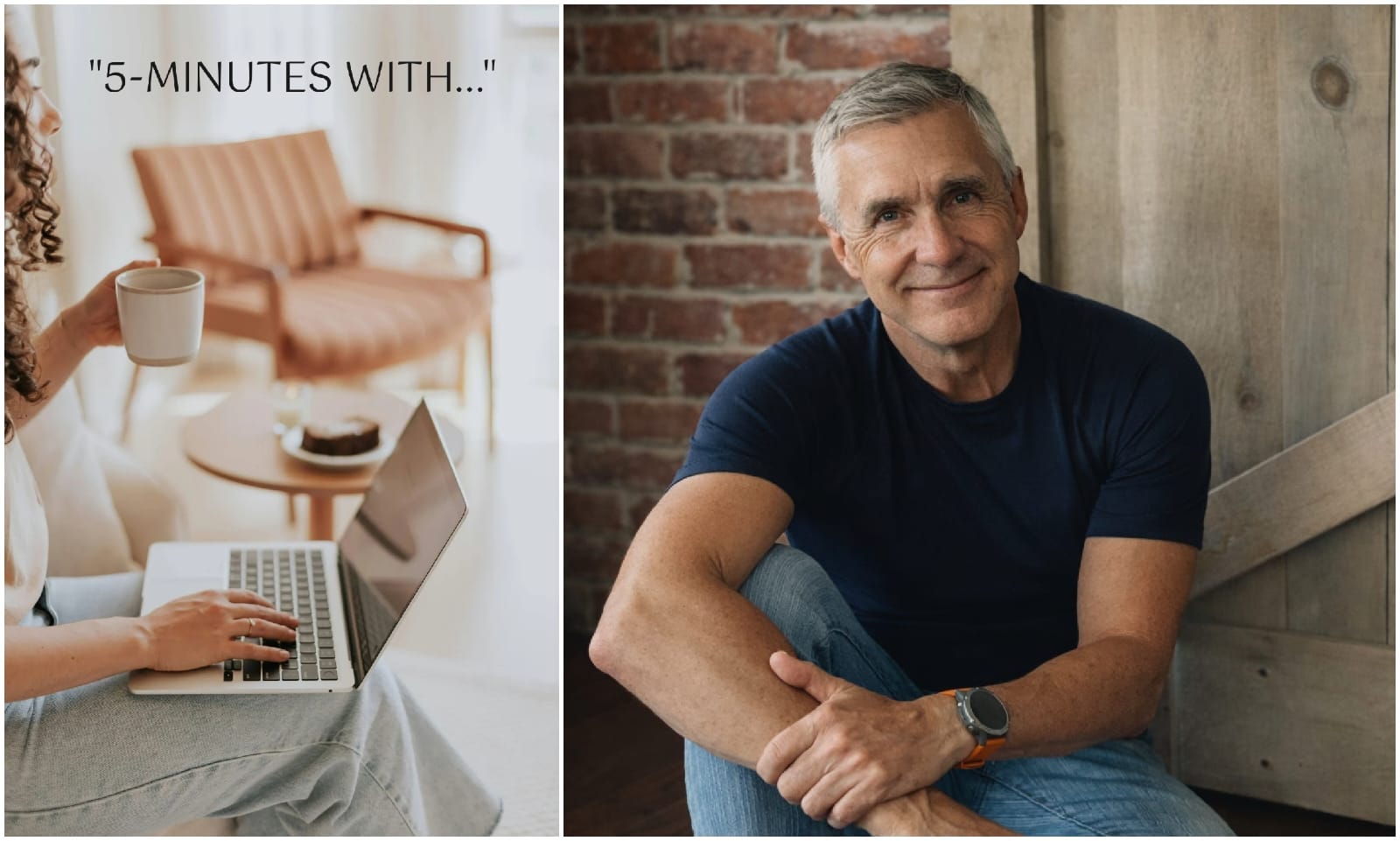
If you’d like to be part of the ‘5 Minutes With…’ series, or you know a woman whose voice would feel like medicine here, email me at hello@kiransinghuk.com. And if you’re reading this thinking, same, tell me in the comments: what are you unlearning in midlife?
I've always wondered if being called "sir" hit men the same way suddenly being called "ma'am" hits women. I'd like to say that I've leaned in, but it still takes me by surprise sometimes!