

There is a quiet, jarring moment that many women experience in midlife: catching a reflection in a shop window and failing to recognise the woman looking back. It is rarely a crisis of aging, but rather a sudden, undeniable awareness of the gap between our interior self and our exterior expression. We carry wardrobes full of past ambitions, former corporate roles, or identities constructed to keep the peace and meet expectations, leaving us with a rail full of clothes and a persistent feeling that we have nothing to wear.
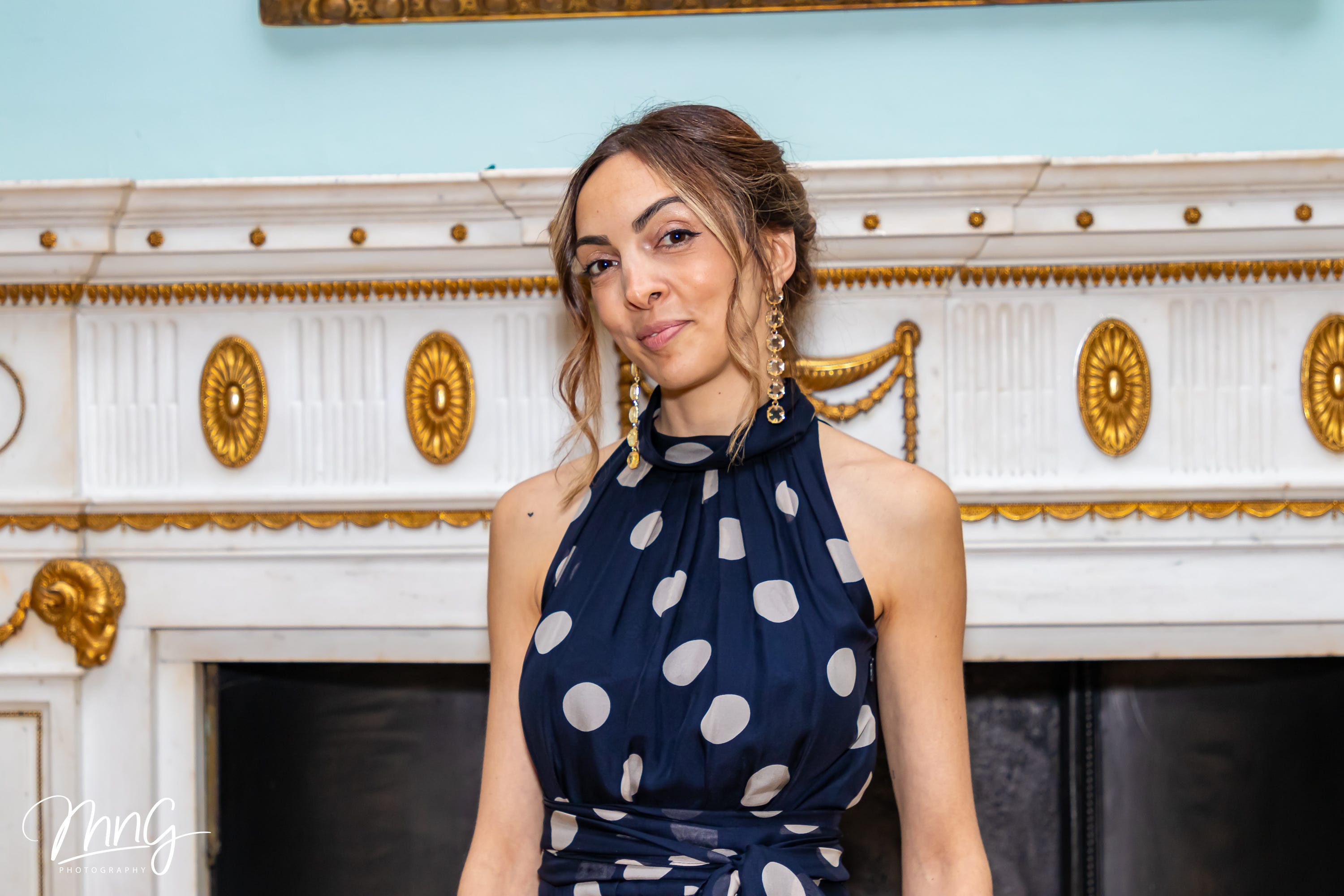
Enter Carolina Marsoli, founder of Monaco Meraki, who views personal style not as a trend to follow or a performance to execute, but as an act of fundamental coherence. Having built her business following her own profound season of reinvention as a single mother in her thirties, Carolina’s Wardrobe Architect Method addresses the deep emotional geometry of dressing. She gently strips away the false narrative that our changing bodies are a problem to be solved, urging us to stop shopping for aspirational phantoms and start dressing the woman who is actually living here, right now.
In this conversation, Carolina reframes clothing as a tool for presence rather than performance. She offers a practical, deeply compassionate blueprint for auditing our wardrobes, releasing stored guilt, and cultivating an effortless elegance that allows our outside to finally match our inside.
You talk about style being about coherence and having your outside match your inside. What does that mean to you, and why do you think getting dressed can have such an impact on how a woman feels about herself?
For me, coherence is that lovely feeling when you look in the mirror and recognise yourself because what you’re wearing feels right for the woman you are.
I think we underestimate how much our clothes affect us. We spend so much time in them! They accompany us into meetings, on dates, through difficult conversations, and into new chapters of our lives.
And when something feels off, we notice. We spend the day pulling at our trousers, adjusting our jacket, or wondering whether we’ve got the outfit completely wrong.
I want women to have that mental space back.
When your wardrobe reflects who you are, getting dressed becomes so much easier. You stop worrying so much about what you’re wearing and get on with whatever you actually want to do.
That’s what I mean by coherence. Your clothes are working with you, rather than making you question yourself before you’ve even left the house.
So many women reach midlife and realise their wardrobe reflects an older version of themselves, or a version of themselves they thought they were supposed to be. How can a woman begin to identify the woman she is now and let that guide the way she dresses?
I would start by asking her to forget about fashion for a moment. Seriously!
Before we talk about clothes, I want to know what her life looks like today. What does she do? Where does she go? What does she enjoy? How does she want to feel when she walks into a room?
Because sometimes we’re still shopping for a woman who doesn’t actually exist anymore.
Perhaps she had a corporate career and now runs her own business. Perhaps her children have grown up. Perhaps she’s been through a divorce, moved countries, or simply reached a point where she thinks, “Hang on, what do I actually want?”
I think midlife is a wonderful opportunity to ask those questions.
Then we look at her wardrobe. Not to throw everything away, but to understand which pieces still belong in her life and which ones she’s holding on to out of habit.
And here’s the interesting part: sometimes the woman she is today is already in there. She just hasn’t given herself permission to dress like her yet.
Your Wardrobe Architect Method starts with what a woman already owns rather than sending her shopping. What have you learned about why women can have a wardrobe full of clothes and still feel like they have nothing to wear?
I could talk about this ALL day!
One of the biggest things I’ve noticed is that women often buy individual pieces without thinking about how those pieces will work together.
They see a beautiful blouse, buy it, bring it home, and then realise they have absolutely nothing they want to wear it with. So they buy something else.
And suddenly, they have a wardrobe full of lovely clothes but very few actual outfits.
There’s also an emotional side to it. We buy things for the woman we want to become, the life we imagine having, or because we think we should own them.
My approach is to understand those patterns first.
Then comes my favourite part: taking what a woman already owns and creating outfits she would never have thought of herself. I teach her why they work, how to repeat the process, and what she genuinely needs, if anything.
I don’t want to hand someone 30 outfits and disappear. I want her to open her wardrobe six months later and still know exactly what she’s doing.
For a woman who wants to create a wardrobe that feels comfortable, stylish, and elegant, while genuinely reflecting who she is today, what are your best tips for creating that kind of wardrobe without constantly buying more?
First, stop shopping for a little while. Your wardrobe deserves a proper introduction before you invite any more clothes into it!
Start by looking at what you actually wear. Not what you wish you wore, or what you bought because someone on Instagram looked fabulous in it.
What do you reach for on an ordinary Thursday?
Those pieces will tell you a lot about your real preferences.
Next, experiment. Try different combinations, play with proportions, add accessories, and see how many outfits you can create from the same pieces.
And please, pay attention to fit. A simple pair of trousers that fits beautifully can do far more for an outfit than an expensive designer piece that doesn’t sit properly. That’s elegance.
Finally, before buying anything new, ask yourself: Can I wear this with at least three things I already own? If the answer is no, think twice.
Body shape and proportions can change as we move through midlife, and sometimes our relationship with our changing body changes too. How can women dress their bodies with confidence without falling into the trap of trying to hide themselves?
I wish more women understood that their bodies are not the problem. Sometimes it’s simply the clothes!
Our bodies change throughout our lives. That’s normal. But we can be incredibly hard on ourselves when the trousers we’ve owned for ten years suddenly don’t fit the way they used to.
And what do we do? We blame our bodies.
I would much rather help a woman understand her proportions, discover the cuts that feel comfortable and flattering to her, and learn how to create balance through her outfits.
I also think it’s important to separate dressing for yourself from dressing according to someone else’s rules.
If you love your waist, let’s celebrate it. If you prefer a relaxed silhouette, wonderful! There isn’t one correct way to dress a particular body shape.
Your body has carried you through an extraordinary amount of life.
The least we can do is stop asking it to squeeze into clothes that no longer serve it.
You describe colour as a strategic tool rather than simply a matter of personal taste. How can understanding the colours that work for us change not only our wardrobe, but the way we are perceived and the way we show up in the world?
Colour is fascinating because it can change the entire feeling of an outfit without changing anything else.
You can wear exactly the same suit in black, navy, cream, or bright red, and each version communicates something different.
That’s why I look at colour from two perspectives.
First, there’s the personal side: which colours complement your natural colouring, make you feel wonderful, and genuinely appeal to you?
Then there’s the strategic side: what do you want your clothes to communicate?
For example, a woman might want to look authoritative in a boardroom but approachable when meeting potential clients. We can use colour, alongside fit and styling, to help create those different impressions.
But I never want colour analysis to become another set of rules that makes women feel restricted.
If you absolutely adore a colour that isn’t traditionally considered part of your palette, I’m not going to tell you to throw it away! We can explore how to wear it.
The goal is to give women more confidence in their choices, not another reason to second-guess themselves.
There is something powerful about wearing an outfit and feeling like yourself rather than feeling dressed up as someone else. How do you help a woman discover her personal style identity when she has spent years dressing around work, family, expectations, or trends?
I think the first thing is giving her permission to have preferences again.
But so many women have spent years dressing for everyone and everything else. Their jobs, their children, their partners, their professional roles, or whatever fashion happens to be telling them to wear.
Eventually, they forget to ask themselves what they actually like.
When I work with a woman, I pay attention to the pieces she naturally gravitates towards, the colours she loves, and the outfits that make her stand a little differently.
I also want to know what she doesn’t like. That’s just as important! And then we experiment.
Sometimes I’ll put together an outfit from clothes she’s owned for years, and she’ll look in the mirror and say, “Oh! I would never have thought of wearing that together.”
I LOVE those moments.
Because we’re not inventing a completely new woman. We’re discovering a way for her to express herself that feels right for where she is now.
Your work is particularly focused on ambitious women, executives, founders, and women building personal brands. How can clothing become a tool for confidence, presence and influence without becoming a performance?
This is something I’ve been thinking about a lot lately. I think we’re all a little exhausted by the pressure to perform.
To look successful, sound confident, appear completely in control, and somehow have everything figured out.
And clothing can easily become another part of that performance.
A woman thinks she needs the expensive handbag, the perfectly tailored blazer, or the wardrobe she imagines a successful founder should own. But what if none of those things feels like her?
I work with women to understand what their professional lives actually require and how they want to present themselves within those environments.
Of course, appearance matters. People form impressions, and clothing can influence those impressions.
But I don’t believe a woman needs to dress like somebody else to be taken seriously.
I want her to walk into a room feeling comfortable with herself, knowing that her clothes are appropriate for the occasion and reflect the person she wants to be.
Then she can focus on the conversation, the presentation, or the business she’s there to do.
That’s where clothing becomes useful. It supports her presence instead of demanding her attention.
You became a single mother in your 30s and built Monaco Meraki from that chapter of your life. How has your own experience of reinvention shaped the way you think about identity, ambition, and the woman we become through different seasons of our lives?
Becoming a single mother in my 30s changed the way I looked at so many things.
Suddenly, I had to think differently about my future, my responsibilities, and what I wanted to build for myself and my children.
And I think when life changes like that, you discover parts of yourself you didn’t necessarily know were there.
You also have to let go of certain ideas about how your life was supposed to look, and start doing your own thing, trusting your instinct.
Building Monaco Meraki has been part of my own reinvention. It’s allowed me to bring together my love of fashion, my interest in people, and my desire to help women feel more confident in themselves.
But I don’t see reinvention as becoming an entirely different person.
I think it’s more about getting to know yourself again, with everything you’ve learned along the way.
And that’s something I recognise in the women I work with.
We can be ambitious, love our families, build businesses, experience difficult chapters, change direction, and still want to feel beautiful and excited about our lives. Those things aren’t mutually exclusive.
I certainly don’t think reaching midlife means we’ve finished becoming who we’re going to be; if anything, we are only starting. I can’t wait to turn 40 in a couple of months. I’m finding it rather exciting to discover what’s next!
If you could give every woman entering her 40s or 50s one piece of advice about her wardrobe and the relationship she has with her clothes, what would you want her to know?
Stop waiting to become a different version of yourself before allowing yourself to dress beautifully.
Don’t wait until you’ve lost the weight, got the promotion, started the business, or figured out exactly what you’re doing with your life.
And please don’t assume the answer is another shopping trip!
Start with what you have. Get curious about what you love, what you wear, and what makes you feel good.
Learn how to put those pieces together in ways that suit your life today.
And if something genuinely needs replacing, wonderful. Buy it with intention.
But remember that your wardrobe is there to serve you, not the other way around.
You’ve already lived enough life to know that there will always be another chapter, another change, another version of yourself to discover.
You don’t need to wait for the next one to start dressing like you matter.
You already do ❤️
What lingers long after speaking with Carolina Marsoli is the liberating realization that personal style requires no grand reinvention or frantic shopping trip. It simply asks for curiosity, self-respect, and the permission to stop waiting for a future, idealised version of ourselves before we allow ourselves to dress beautifully. When we stop asking our changing bodies to squeeze into clothes that no longer serve us, getting dressed ceases to be a daily friction and becomes a quiet act of devotion.
As we navigate our forty-ninth year and step toward the threshold of fifty, Carolina’s philosophy serves as a gentle reminder that our wardrobes should support our lives, not demand our performance. The goal is not to invent a new woman, but to clear away the clutter until the woman who was there all along can finally step into the light and recognise her own reflection.
CONNECT WITH CAROLINA ON INSTAGRAM | CHECK OUT HER WEBSITE
It was a pleasure to be part of your Substack; thanks for inviting me! ❣️
As part of the free subscription to @thewardrobearchitect, you will receive the Wardrobe Pattern Assessment to identify the patterns you repeat in your wardrobe, helpful if you wish to improve your personal style and your relationship with your closet and your presence.