

Robin Dimond: What Happens When Surviving Changes What You’re Willing to Waste
There are moments in life that divide everything into a before and an after. For Robin Dimond, one of those moments came in her 30s, when she experienced a stroke and was forced to confront just how quickly life can change. But what stayed with me about Robin’s story is that it didn’t lead her to the version of midlife we so often hear about. She didn’t suddenly decide to slow down, want less, or step away from ambition. If anything, the experience made her more determined to build a meaningful life, create security, and make the time she has count.
Today, Robin is the founder of Fifth & Cor, building a company across medical aesthetics, wellness and longevity, with a perspective shaped not only by business but by a deeply personal understanding of vulnerability, health and the desire to have some agency over our own future. Her experience has also given her a refreshingly honest view of what it means to live well. Not a life without pressure or responsibility, but one built with purpose and with a clearer understanding of why we are doing what we are doing.
In this conversation, Robin talks openly about ambition, ageing, resilience, health and the decisions we make when we become more conscious of time. We explore what happens when survival doesn’t make you want to retreat from life, but instead makes you more unwilling to waste your energy on things that don’t move you forward. Because perhaps one of the most powerful things we can do in midlife isn’t to become less ambitious. Perhaps it is to become much more discerning about what our ambition is actually in service of.
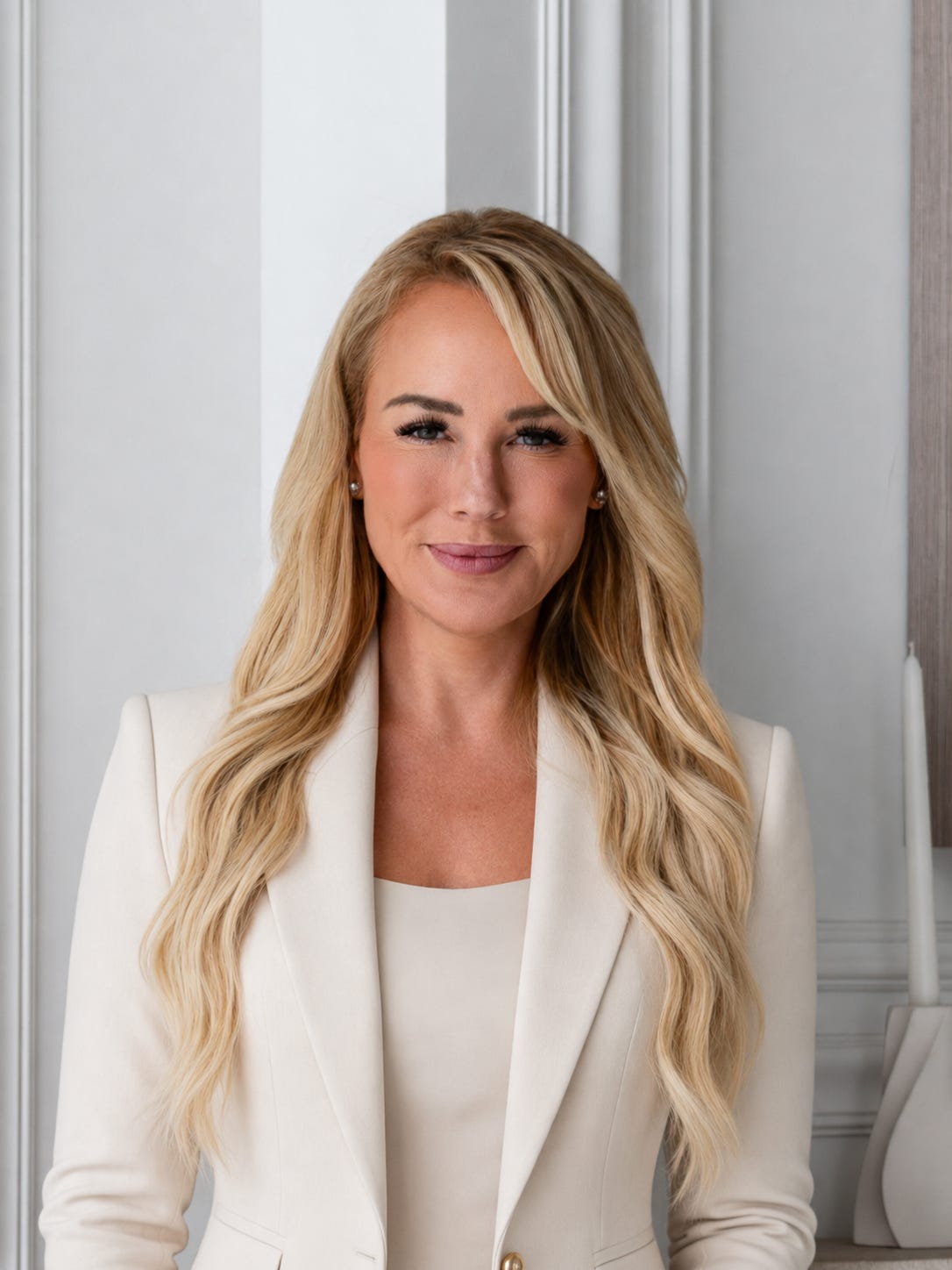
You experienced a stroke in your 30s, at a point in life when I imagine mortality wasn’t necessarily something you were thinking about. What did that experience change in you that has stayed with you into your 40s?
It made me understand how quickly life can change, but it did not magically give me permission to slow down.
People assume that after something life-altering, the world pauses while you recover and reevaluate everything. It does not. The bills keep coming. People still depend on you. Your responsibilities do not disappear because something frightening happened.
If anything, I ramped up even more. The stroke created an urgency in me. It made me more determined to build something meaningful, create security for myself, and make the most of the time I had. I did not walk away from ambition. I became even more ambitious.
There is often a before and after when something fundamentally changes our relationship with our own body and mortality. What did the woman before your stroke believe about life, success, and time that the woman you are today no longer believes?
I stopped taking time for granted. I also learned that resilience is rarely as graceful as people make it sound. Sometimes resilience is not taking a break, finding balance, and emerging with all the answers. Sometimes it is getting up, going back to work, and doing what needs to be done because life is still moving around you.
The woman I am today understands that no one is coming to build your future for you. You can be shaken by what happens to you and still refuse to stand still.
You went on to build Fifth & Cor, with a strong presence in medical aesthetics, wellness, and longevity. How much of what you are building today was shaped by what happened to you personally?
My experience gave me a personal understanding of how vulnerable it feels when your health suddenly becomes uncertain. It also showed me how much people want to feel some sense of agency over their bodies, their futures, and the way they live.
That perspective shapes how we approach medical aesthetics, wellness, and longevity at Fifth & Cor. Behind every treatment, technology, or service is a person trying to feel better, live better, or regain some control. We never want to market that vulnerability irresponsibly. We want to communicate with honesty, empathy, and a respect for what is actually at stake.
It also shaped the way I built the company. I knew life could change without warning, so waiting for the perfect moment was never an option.
We talk so much about longevity as adding years to our lives, but much less about what we want those years to actually feel like. What does living well mean to you now?
Living well does not mean living without pressure, responsibility, or ambition. That is not realistic for most people.
For me, it means building a life with purpose. It means doing work that matters, creating security, taking care of the people I love, and knowing that the effort I put in is moving something forward.
I still work hard—probably harder than I did before my stroke. The difference is that I understand why I am working so hard. Longevity is not just about accumulating years. It is about making those years count.
Has your relationship with ambition changed since your stroke? Do you still want the same things you wanted in your 30s, or has your definition of success evolved?
There is a popular idea that surviving something life-changing should make you slow down, step back, and want less. That was not my experience. Life did not slow down for me, so I did not slow down either.
If you want to be successful, there are moments when you have to keep moving even while you are healing. The bills do not stop. The responsibilities do not wait. The future you want still has to be built.
What has changed is the purpose behind my ambition. I am not working simply to prove that I can. I am building something that creates impact, supports other people, and gives me the freedom to shape my own future.
For many women, their 40s bring a reckoning with time, identity, and the realisation that there isn't an infinite number of chapters ahead. Has turning 40 changed the way you make decisions about what deserves your energy?
Turning 40 has not made me less driven. It has made me less willing to waste that drive.
I am clearer about what deserves my energy and far less interested in spending it on situations, expectations, or relationships that do not move my life forward. Time feels more valuable now, which means I make decisions more decisively.
I am still saying yes to big goals. I am simply saying no faster to the things that distract me from them.
You are building a business in industries that are increasingly focused on ageing, appearance, wellness and longevity. Where do you think the conversation about ageing gets it right, and where do you think we are still getting it completely wrong?
We get it right when we give people more knowledge, agency and options for taking care of themselves as they age.
We get it wrong when ageing is treated like a failure that needs to be corrected or hidden, especially for women. There is a difference between wanting to feel confident and being made to believe your relevance has an expiration date.
I also think wellness is too often presented as though everyone has unlimited time and resources to optimize every part of life. Most people are balancing careers, families, finances, and responsibilities. The conversation needs to make room for that reality. Well-being cannot become one more impossible standard people feel they are failing to meet.
What has your experience taught you about the difference between looking well and actually being well?
Looking well is what other people can see. Being well is what you know to be true when no one else is watching.
You can look polished, productive, and completely in control while your body is telling a very different story. I know firsthand that appearance is not proof of health—and success is not proof that everything behind the scenes is easy.
Actually being well requires honesty. It means paying attention to your body, advocating for yourself, and recognizing that strength and struggle can exist at the same time.
When you look at the woman you were before that life-changing experience and the woman you are becoming now, what are you most proud of her for learning, and what are you still learning to let go of?
I am most proud of her for learning how to keep going.
Not in a polished, inspirational-quote kind of way. I mean getting up when life was difficult, continuing to work, rebuilding when necessary, and refusing to allow one experience to define the rest of her story.
I am still learning to let go of the belief that strength means carrying everything alone. I may never be someone who naturally slows down, but I am learning that accepting support does not make me any less capable.
You are now in your 40s and building the next chapter with everything you know today. If you could design the next decade deliberately, rather than simply letting it happen, what would you want it to look and feel like?
I want it to feel expansive, purposeful, and really make a difference.
I want to keep building Fifth & Cor into a company that creates meaningful growth for our clients and opportunities for our people. I want to take bigger risks, push more boundaries, and continue creating the kind of impact that extends beyond me.
I do not envision the next decade as a period when I finally slow down. I see it as a time when everything I have survived, learned, and built begins working together.
I want to enter 50 knowing I did not wait for life to become easier before going after what I wanted. Life never slowed down for me. I learned how to rise to meet it.
What I love about Robin’s perspective is that it challenges some of the stories we have been handed about what midlife is supposed to look like. We are often told that getting older means slowing down, wanting less, stepping back, or becoming more cautious. Robin offers another possibility: that getting older can make us clearer. Clearer about what matters, clearer about where our energy belongs, and clearer about what we are no longer prepared to waste it on.
Her definition of longevity is equally compelling. It isn’t simply about adding more years to our lives, but about making those years count. And perhaps that is the more interesting question for all of us: not simply How long do I want to live? But What do I want those years to feel like, and what do I want them to be for?
Robin is still learning, too. She speaks candidly about letting go of the belief that strength means carrying everything alone and recognising that accepting support doesn’t make her any less capable. And as she looks towards 50, she isn’t imagining a decade of finally slowing down. She wants it to feel expansive, purposeful and impactful, bringing together everything she has survived, learned and built.
Perhaps that is the real invitation here: We don’t have to wait for life to become easier before we go after what we want. We can meet the life we have, exactly as it is, and still choose to build something extraordinary with it.
If this piece stayed with you, don’t rush past it. Let it settle.
You can take this further inside The Midlife Circle, where I share more personal reflections, deeper conversations, and gentle guidance to help you live this chapter with more clarity, intention, and ease.
If you’re feeling the pull to go deeper in a more personal way, you can also explore working with me. And if this resonated, tap the ♡, leave a comment, or share it with someone who might need this today.