


Hello, my Love, and welcome back to Letters from Midlife, part of Midlife by Design: Curating Your Next Chapter Podcast.
I’m Kiran, and today I’m responding to a letter from one of our listeners, a woman who, like so many of us, has spent years holding everything together, only to realise she’s forgotten how to truly rest.
She writes:
“I’m exhausted, not just tired, but bone-deep weary. I know I need to slow down, but I don’t know how. I’ve spent years being busy, productive, and needed. Now, when I try to rest, I just feel guilty or restless. How do I learn to rest without feeling like I’m wasting time?”
First of all, my Love, I want to say this gently but clearly, you’re not lazy, and you’re not broken. You’re simply decompressing from decades of being in “go” mode.
Most of us have lived entire lives built around responsibility, work, family, caring, showing up, and making things happen. So, when life finally quiets down and the space appears, it can feel uncomfortable, even wrong. We crave rest, yet resist it at the same time.
Here’s the thing: rest isn’t a reward for being productive. It’s the foundation that allows you to be well, think clearly, and live with intention.
When I was in that same place, I realised I didn’t actually need another self-care routine. I needed to relearn the rhythm of enough. I had to untangle my worth from my output, and remind myself that stillness isn’t absence, it’s presence.
So, if you’re listening right now and nodding along, here’s what I want to offer:
Five Ways to Begin Learning to Rest Again
1. Redefine what rest means to you. Rest doesn’t always look like lying still. Sometimes it’s creating a boundary. Sometimes it’s cooking slowly, reading for pleasure, pottering in the garden, or sitting quietly with your tea.
Ask yourself: What actually replenishes me, not just distracts me?
2. Start with micro-rest. If the idea of slowing down feels foreign, begin with small pauses.
Take a deep breath before opening your emails.
Five minutes of silence after lunch.
Closing your eyes before bed and placing your hand on your heart, just to say, I’m here.
It’s in these small moments that your nervous system learns to trust safety again.
3. Rewrite the guilt story. Every time you feel guilty for resting, remind yourself: I’m not being unproductive, I’m replenishing my capacity to live well.
That inner voice that calls you lazy? It’s not the truth. It’s conditioning.
4. Create seasonal rhythms instead of rigid routines. We’re cyclical beings; our energy ebbs and flows like the seasons. Maybe autumn invites you inward, winter calls for deeper stillness, and spring nudges you into motion again. Align your self-care and productivity around that natural rhythm, instead of fighting it.
5. Anchor yourself with one gentle ritual.
Light a candle when you finish work.
Play soft music as you make your morning tea.
Keep a “rest list”, simple things that bring you back to calm.
Tiny rituals, done consistently, retrain your mind to feel safe in stillness.
Journaling Prompt for This Week
If I trusted that rest wasn’t wasting time, what would I allow myself to do, or not do, today?
Write it out. Then, actually try it. Even for ten minutes. Because rest isn’t something you earn, it’s something you deserve.
This next part is for those of you ready to move from knowing you need rest to actually creating it.
Below, you’ll find:
Guided Reflection: The deeper emotional reason many women struggle to rest, and how to rewrite that narrative.
The Gentle Rest Practice: My personal 10-minute ritual to help you soften into stillness.
Downloadable Companion: The Gentle Rest Workbook, a printable guide with journaling prompts, micro-rest rituals, and seasonal self-inquiry.
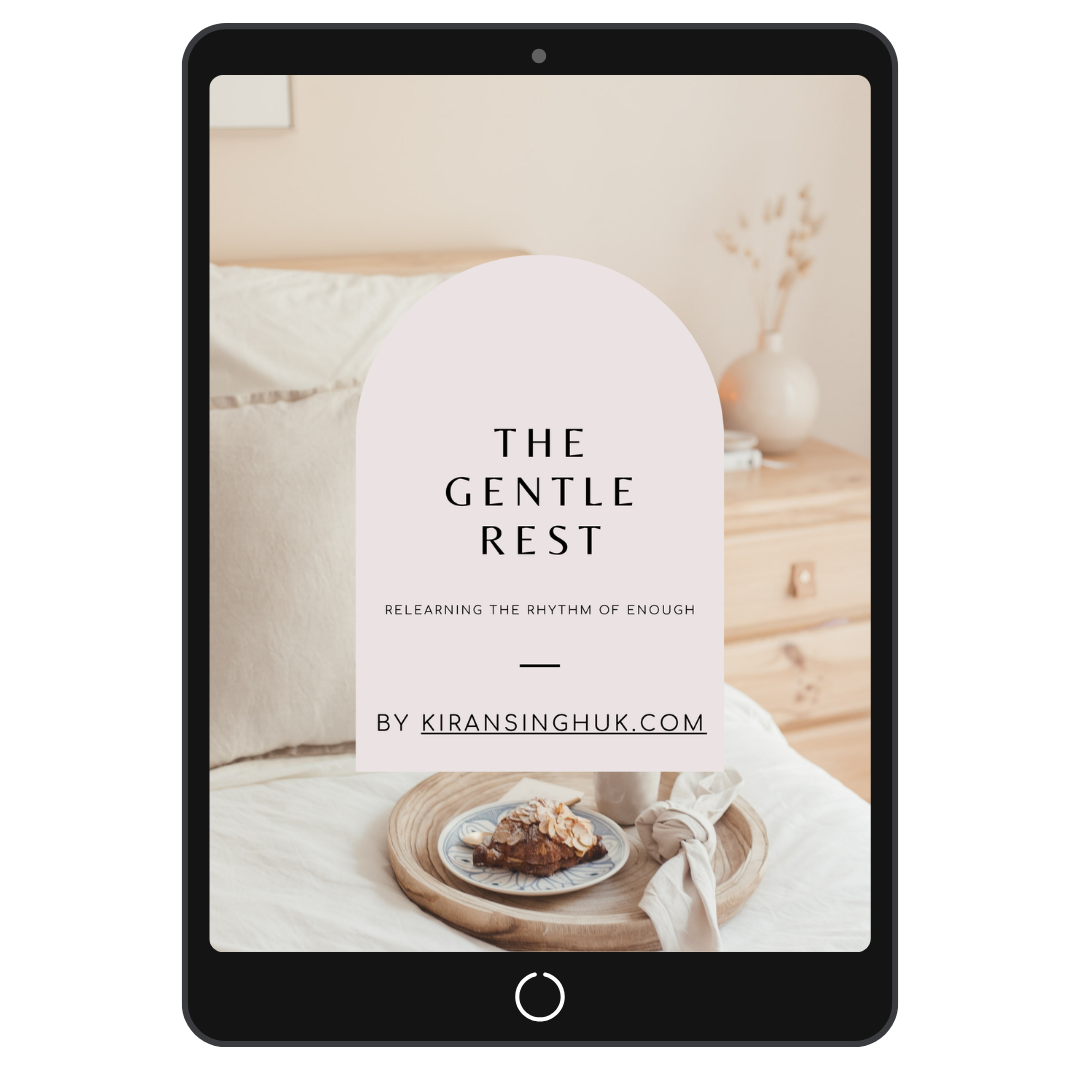
Your rest isn’t a luxury. It’s your quiet revolution.
The Emotional Truth About Why Rest Feels So Hard
For many women in midlife, rest is not simply about slowing down; it’s about safety. When you’ve built your worth on reliability, output, and care for others, stillness can feel like disconnection, even danger. Your body may be saying, “We’re safe now,” while your nervous system whispers, “Keep moving, they need you.”
That’s why the path to true rest isn’t about doing less, it’s about feeling safe enough to stop. The moment you realise that, rest becomes not avoidance, but healing.
Try this gentle reflection:
“If I no longer needed to earn my place in the world, how would my body move differently today?”
Pause. Don’t rush to answer. Let your body respond before your mind does.
The Gentle Rest Practice
A 10-minute invitation to return to yourself:
Make a warm cup of tea and sit somewhere soft and comfortable.
Put on a relaxing playlist, the one below is beautiful
Place one hand on your heart, one on your abdomen.
Breathe in slowly, whispering inwardly: I am safe to rest.
Exhale: It’s safe to stop.
Notice what sensations arise: warmth, resistance, quiet.
When you finish your tea, write down one word that describes how rested you feel right now.
This ritual trains your body to link rest with safety, not guilt.
DOWNLOAD: The Gentle Rest Workbook
A printable companion for this week’s letter. Inside, you’ll find:
Micro-rest rituals for body, mind, and spirit
Seasonal reflections to attune your pace
“Rest Guilt” reframing exercises
Space for your weekly rest journal
→ [Download The Gentle Rest Workbook (PDF)]

Closing Reflection
Remember, rest isn’t the pause between your life. It is your life. Every breath, every sip of tea, every gentle refusal to rush, that’s you returning home.
Kiran x
Kiransinghuk.com | The Sattva Collective