


I’ve been thinking lately about how badly we misunderstand brokenness. We treat it like an ending, a flaw, a sign that something has gone wrong. Especially as women. Especially in midlife.
We’re taught to admire what looks untouched: youthful skin, seamless bodies, effortless marriages, tidy homes, uninterrupted careers. The kind of life that appears smooth from a distance, as though nothing difficult has ever happened there.
But midlife doesn’t leave you untouched, as by this point, most of us have lived enough to know that. We’ve been cracked open by grief, reshaped by heartbreak, worn down by caregiving, hormones, disappointment, and reinvention, by endings we didn’t choose and beginnings we didn’t feel ready for. We’ve carried losses no one can see. We’ve held families together while quietly coming apart inside. We’ve smiled through pain, adapted through exhaustion, and kept going through seasons that asked everything of us.
And somewhere along the way, many of us started believing that those cracks made us less beautiful, less desirable, less whole, less worthy.
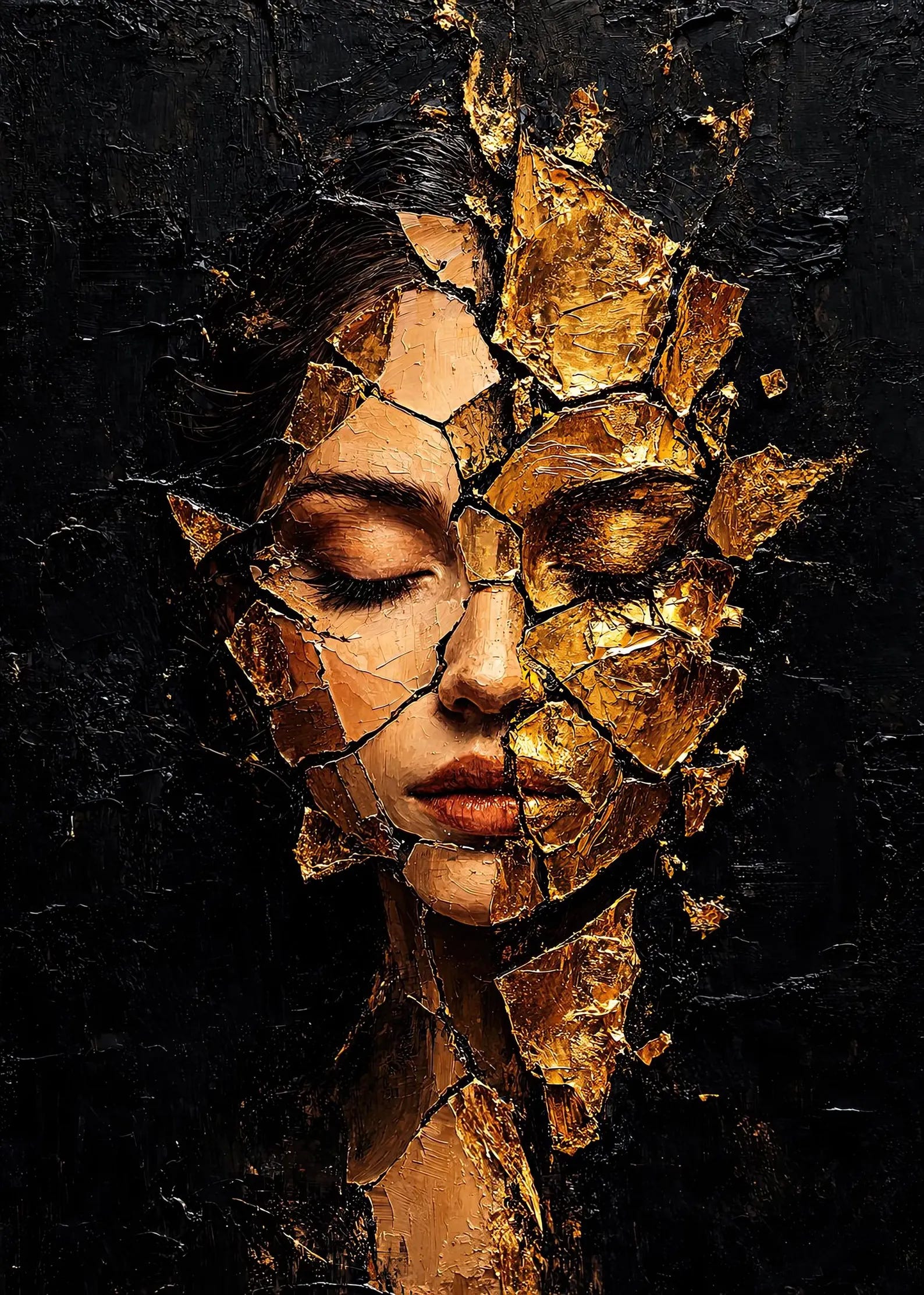
But then there’s Kintsugi, the Japanese art of repairing broken pottery with gold, not hiding the cracks, not pretending the break never happened, not discarding the piece because it’s no longer perfect.
Honouring the break, highlighting the repair, making the history part of the beauty. And honestly? I can’t think of a more perfect metaphor for midlife. Because this season of life is not about returning to who we were before, it’s about becoming someone wiser through what we’ve survived. The cracks don’t diminish the piece; they tell its story. They show that it lived, that it endured, that it was worth repairing.
That, to me, is Kintsugi, and that, to me, is us.
I think about my own life, and I can see the gold now, though I couldn’t always while I was living through it: the grief of losing my mum and my younger brother, leaving a whole life behind in Norway and returning to the UK with a toddler and a nervous system stretched desperately thin. The heartbreak, the rebuilding, the loneliness, the years of simply functioning while quietly trying to work out who I even was anymore. The body pain, the advanced arthritis, the perimenopause symptoms that turned the volume up on everything and the moments where I genuinely thought I was falling apart.
At the time, it didn’t feel like art; it felt like survival. It felt messy and unfair and deeply unphotogenic. But looking back now, I can see that none of those cracks destroyed me. They revealed me. They softened what needed softening. They strengthened what needed strengthening. They taught me to stop chasing perfection and start respecting truth.
Midlife has been the season where I’ve stopped trying to hide the breakages. I’m not interested in pretending I’ve had an easy life. I’m not interested in performing wellness or polished resilience. I’m not interested in being admired for how untouched I look.
I want to be real. I want to be the woman who says, “Yes, life broke me in places. And yes, I repaired myself with care. And yes, there is gold in that.” Because there is.
There is gold in the boundaries I now keep. Gold in the way I feed myself properly instead of punishing my body. Gold in the quiet rituals that hold me. Gold in the way I’ve learned to choose peace over performance. Gold in the honesty. Gold in the tenderness. Gold in the fact that I stayed.
That’s what I wish more women knew about midlife: You do not need to erase what happened to be worthy of what comes next. You do not need to become unmarked to be beautiful. You do not need to return to your younger self to be whole.
Wholeness in midlife looks different. It’s not smooth, it’s not untouched, it’s textured, layered, and earned. It’s the woman who has been through enough to know what truly matters now. The woman who no longer confuses perfection with worth. The woman who understands that healing is not the same as going back. The woman who knows her cracks are not evidence of failure, but of a life fully lived.
And perhaps that’s why Kintsugi moves me so deeply. because it doesn’t ask the broken piece to be ashamed, it says, “Look what you survived. Look what you became because of it. Look how the light catches there now.”
Maybe that’s what midlife is, not a decline, not a disappearing, not a slow fading into irrelevance.
Maybe it’s the gold stage. The chapter where the fractures stop being something we apologise for, and become something we honour: the chapter where we stop hiding our history and start wearing it with quiet reverence. The chapter where we finally understand that being repaired is not the opposite of being beautiful.
It is the beauty.
Continue reading
The full Midlife Circle version of this piece goes deeper. Inside, we explore how to recognise the gold in your own life, how your “cracks” may be pointing you towards truth rather than failure, and how to begin honouring your repair across the five core life areas.
In the paid section, I share:
The Midlife Kintsugi Reflection: how to identify the seasons that changed you
A Five Core Life Areas repair practice for health, self-discovery, relationships, purpose, money, and quality of life
Journaling prompts to help you reframe brokenness, grief, and starting again
A gentle Gold Thread Ritual to honour the woman you’ve become
No fixing, no pretending, just a quieter, truer way of seeing yourself.
