

There is a particular kind of morning I return to in my mind more often than I probably let on.
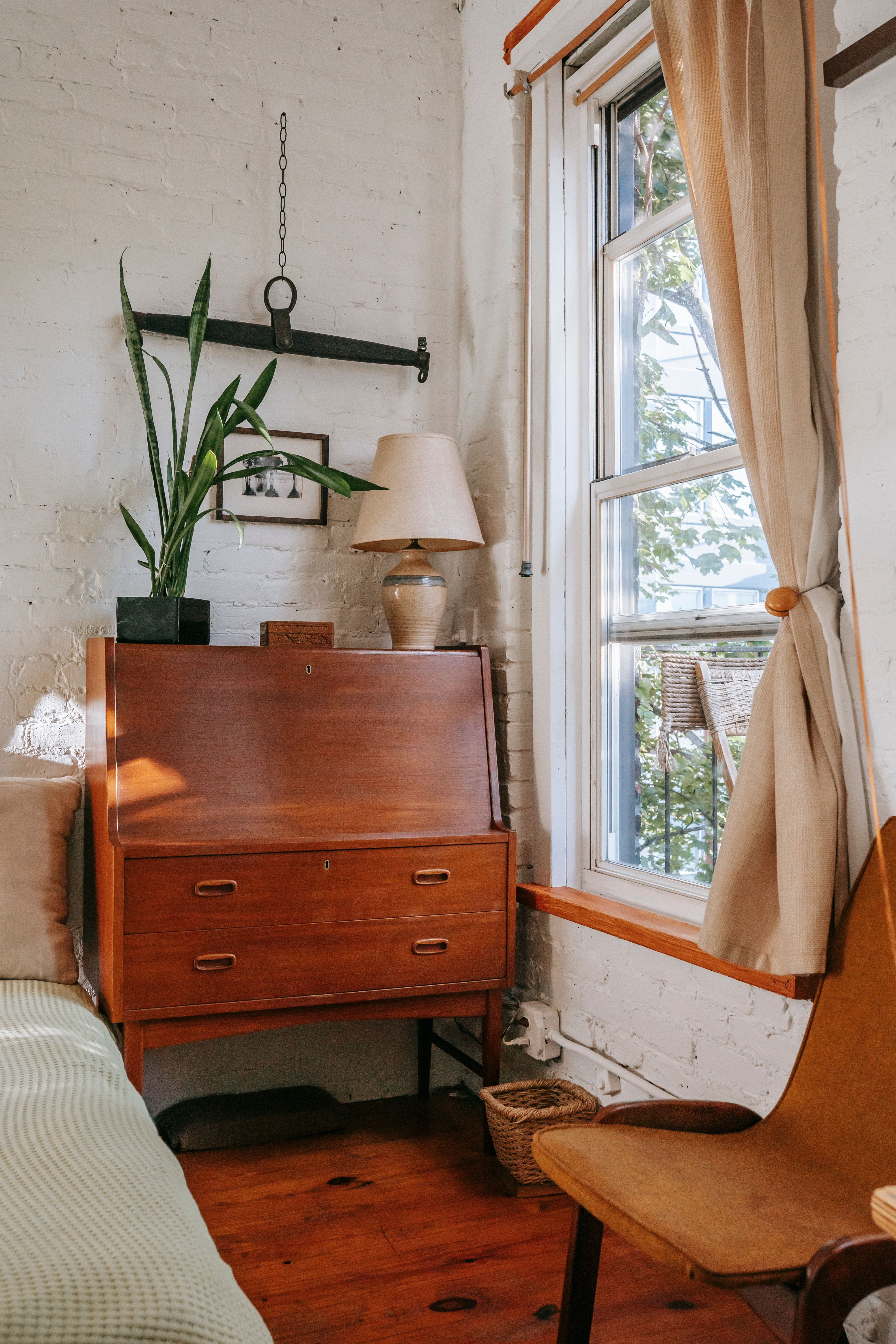
Our apartment up north. My bed, sitting right beneath the big windows, the kind of windows that let the whole morning in. It was early summer, that specific coolness that exists before the heat arrives and changes everything, and I had them wide open. The trees outside were rustling in that quiet, unhurried way that makes you feel like the world has not yet asked anything of you. A cotton throw pulled around my shoulders. A cup of vanilla chai latte, warm in my hands.
Nothing about that morning was remarkable. And yet I have thought about it dozens of times since, because of how it felt from the inside.
Complete. Enough. Quietly, unmistakably wealthy.
We live in a world that is very good at convincing us we need more.
More things, more convenience, more upgrades, more newness. The next improvement is always just around the corner, and the marketing around it is so fluent, so persistent, so quietly persuasive, that we can find ourselves in a cycle of acquiring and discarding and acquiring again without ever quite stopping to ask whether any of it is actually making us feel the way we hoped it would.
Most of the time, it isn’t.
Most of the time, the thing we were actually looking for, the ease, the satisfaction, the sense of richness, was never going to be found in the purchase. It was there already, waiting in the quieter, simpler version of the life we already had.
I have learned this, slowly, imperfectly, and repeatedly, over many years.
The season that taught me most about this was not a comfortable one.
When I arrived in the UK in 2008 with my daughter, the recession began almost at the same time. Work fell through. Money was tight in a way that is not romantic or instructive when you are living inside it, just frightening and exhausting and relentless. I learned to use what I had. To cook simply and well from whatever was in the kitchen. To find pleasure in small things because small things were what was available. To stop looking for the life I thought I should be living and start noticing the one I actually have.
What I found in that stripped-back season surprised me.
I found that I needed far less than I had assumed. That simple food, made with attention, nourished me in ways expensive restaurants hadn’t. That a walk costs nothing and restores something. That a home that was calm and clear and mine, even when it was modest and not what I had imagined, felt like enough.
More than enough, actually. It felt like freedom.
That understanding has stayed with me. It has shaped how I live now, even as the circumstances have changed. Even as I have more choices than I did then. Because once you have felt the particular lightness of needing less, the pull of more loses some of its grip on you. Not all of it, I am not immune to a beautiful object or a well-designed space or the quiet pleasure of something made to last. But the frenzy of it, the constant accumulating, the treating of newness as the answer to everything, that I have left behind.
Intentional frugality is not what most people think it is.
It is not deprivation. It is not living on nothing, or denying yourself pleasure, or performing a kind of noble austerity that makes everything harder than it needs to be. It is something more interesting and more demanding than that.
It is discernment. The art of knowing what actually matters to you, what genuinely nourishes your body, your mind, your daily life, and releasing everything that doesn’t. Not because you can’t afford it, but because you have become honest enough about what you actually want to stop spending your energy, your attention, and your money on what you don’t.
That distinction, between a life stripped bare and a life deliberately refined, is everything.
The simplified life is still beautiful. Still sensory. Still full of the small pleasures that make an ordinary day feel like something worth inhabiting. It has just been cleared of everything that was getting in the way.
For me, that clearing has been ongoing and gradual.
It looks like using what I have before I buy something new, going through what’s already in my home, my wardrobe, my kitchen, before I add anything to it. It looks like cooking simple whole food with real ingredients, slowly, as an act of care rather than a chore to rush through. It looks like walking when I could take a taxi, not because I can’t afford the taxi, but because the walk does something for me that the taxi doesn’t. It looks like a calm, clear home, where every surface has been considered, and nothing is there by accident.
And it looks like gratitude, not as a performance or a scheduled practice, but as a genuine noticing. The morning light through wide-open windows. The chai was made exactly right. The afternoon that asks nothing of me. The quiet that is not emptiness but fullness of a different kind.
These things cost very little. They give back, disproportionately and reliably, more than almost anything I have ever spent money on.
Midlife, I think, is the perfect season for this particular reckoning.
Because by now, most of us have tried the other version. We have acquired, upgraded, kept up, and worked hard for things that were supposed to make us feel secure, satisfied, and arrived. And we have discovered, some of us gradually, some of us with a jolt, that the arrival never quite comes that way.
What comes instead, if we let it, is something quieter. A growing clarity about what actually matters. A reduced appetite for what doesn’t. A willingness to let life get simpler, not because we have given up, but because we have finally understood what we were looking for all along.
Not more. Just enough.
And enough, when it is genuinely, honestly enough, it is one of the most spacious and nourishing places you can live.
The Practice
This week, try one thing.
Before you buy anything, anything at all, large or small, pause and ask: do I already have something that does this? What am I actually looking for here? Will this genuinely add something to my life, or am I reaching for it to fill something that won’t be filled this way?
You don’t have to say no. Just pause long enough to make it a real choice rather than an automatic one.
That pause is where intentional living begins.
If this has landed somewhere real, if you recognised yourself in the cycle of accumulating, or felt something stir at the idea of a life that is quieter, clearer, and more genuinely yours, the deeper work is waiting for you inside The Midlife Circle.
Below, we go further: into the practical habits of intentional frugality, how to begin decluttering in a way that is sustainable rather than dramatic, how to build daily rituals that nourish without costing much, and how to define your own version of enough, the life that feels genuinely rich precisely because it is genuinely yours.
Because simplicity is not a project you complete. It is a practice you return to.
And the returning, every time, is worth it.
