
Allison Chawla is a psychotherapist who works mostly with young and middle-aged women, a mother, and a teacher of Buddhism who spends much of her time travelling with Thai monks, which already tells you she’s living life with depth and perspective. She’s just turned 49 and is now 12 months without a period, officially in menopause. In this conversation, Allison shares what it was like to enter perimenopause earlier than she expected, without the roadmap of a mother’s story to guide her, and during the strange isolation of the pandemic, where every symptom felt like it could be something else entirely. She speaks with humour and honesty about the swirl of questions, the moment you wonder if you’re losing your mind, and the sting of being told, however gently, that you’re too young. What unfolds is a powerful story about self-trust, reframing menopause as a beginning, and choosing to move through this life phase with curiosity instead of shame.
Who are you, and what season of midlife are you in right now?
My name is Allison Chawla. I am a psychotherapist, one who works mostly with young and middle-aged women, even a few senior, glorious gals. I’m a mother and a teacher of Buddhism who has the gift of spending most of my time travelling with Thai monks. I just turned 49 recently, and according to my calendar and period tracker, I am 12 months without a period and in menopause!
What surprised you most about midlife or menopause?
What surprised me the most was how early my peri-menopause began. I lost my mother early in life, and had very little information surrounding what menopause would have been like for her. She passed away at 48, and had gone into early menopause due to cancer treatments. So, my path was not only a blurry one, but quite frankly, a mystery. I have this idea of 50 being the end for most, which to me logically meant 48 or 49 would be the onset. I was wrong. I also began symptoms of peri-menopause during the isolation of the COVID pandemic; so each symptom, instead of bringing clarity to my life phase, made me wonder if I was simply getting depressed or going insane from lack of human contact! Was I sweating in the middle of the night because I was having nightmares? Was I drinking too much red wine on certain evenings like so many others were? Should I get another dog? A giant trampoline? An Indoor sauna? Should I get divorced? Maybe I should just have another baby….? Little did I realise I was not breaking down. I was going through the beginning of my life transition into menopause. I was also shocked to find that while they meant well, when I started sharing my experience and insight into what I believed was entering peri-menopause, most women responded with ’no way, you are too young!! Let the shame begin, I thought.
What’s been the hardest part that people don’t talk about?
The hardest part, and the part no one talks about, was the beginning. Before I even knew what was happening, I had to first convince myself I wasn't losing my mind. I was just starting to notice the changes, quietly building the confidence to trust what I was feeling in my own body, when the reactions from others sent me completely sideways.
And they meant well. Every dismissal came with kindness. But because I wasn't showing any outward signs and frankly, because I was still looking younger than my age, no one believed me. Being told, however gently, that you're imagining it doesn't just sting. It pushes you into a much darker place: suddenly, you're not wondering about menopause anymore, you're wondering if something is seriously wrong with you.
Yes, and that’s not the same as being well. The hardest part was realising I would have to become the student of my own body: healing my gut after radiation damage, learning how to truly support detox pathways, rebuilding liver resilience, restoring nervous system regulation, rebuilding muscle, sleeping with intention, and eating in a way that was not just “healthy” but therapeutic.
No one told me how powerful a lifestyle could be. How strategic sleep, strength training, and nervous system regulation are. How a nutrient-dense, specific diet can heal. How cortisol patterns matter. How blood sugar stability changes everything. The grief wasn’t just losing the body I knew. It was realising survival wasn’t the same as restoration. I didn’t want to just be alive; I wanted to feel strong, clear, whole.
What has helped you most (a habit, a mindset shift, support, HRT or no HRT, community)?
What helped me most and began the shift in my perspective and journey was a conversation I had with a supervisor. I shared how I was entering menopause before most friends seemed to be, and while I was ready to not have a menstrual cycle anymore (one that had been based on horrid cramping and heavy bleeding for most of my life until I had my daughters), I had not quite found a place for the reality of this age and how others viewed it. She smiled, then proceeded to tell me, Allison, you are about to become the most productive, the most creative, the most prolific, and liberated part of yourself.
My eyes widened. I smiled but cocked my head with curiosity. Think about how much time you are going to get back from not worrying about when you are getting your period? Do you have pads and tampons at home? Will you get cramps? Will you be travelling during your period? Will it come early? When will it stop? Can you wear white?’ And so forth. She made me realise that while I thought my youth behind me was the end, in fact, it was just the beginning. How blessed I was to be here entering it.
I just had my first HRT appointment, and I’m going for it. Science has come such a long way; the side effects are so much more manageable than what our mothers were told to fear, and the women in my life who are already on it? They all say the same thing: best decision they ever made. But beyond HRT, what’s quietly shifted everything is community. Finding women who are in it too, who get it without explanation, has been everything. There’s something powerful about not having to justify how you feel or prove that what you’re experiencing is real. That alone has been its own kind of medicine.
What are you unlearning?
That menopause is an ending. That it's a wilting rather than a rebirth.
What I'm learning instead is that I've been warming up for the most exciting part of the race. Yes, there's fatigue. Yes, there's discomfort. But there's also something clarifying happening, a shedding of what no longer serves and a sharpening of what does. The women who framed this as a curse or a burden may have genuinely believed that. But I think they were missing something. Every season of life brings difficult changes, puberty, motherhood, loss, and reinvention. Menopause is no different. It's not what happens to you, it's how you choose to move through it. Ageing isn't a curse. It's a gift. And I'm just now starting to unwrap it.
What do you wish you could tell your 35-year-old self?
Girl, it only gets better. You are just getting started. Keep your eyes on the target, don’t let anyone make you feel bad about being you, and share that with others!
What do you want other women to know they’re not alone in?
ALL OF IT. Nothing should be off the table for discussion! Nothing needs to feel abnormal or shameful to discuss. And definitely, chin hairs...
What’s one small ritual or practice that’s keeping you steady in your daily life?
Gratitude. Watching myself change, realising I am still here and alive. Asking questions, seeking support, being open to things like HRT and sitting back without so much estrogen that in the past may have caused me worry, anxiety, and self-doubt that is now dissipating and allowing me to become the bad-ass bitch I have waited all of these years to become
This week, I want women turning 50 to remember:
Turning 50 is not the beginning of the end, but it’s the start of a new chapter of freedom and clarity. And age is just a number. So feeling good, staying empowered and keeping focus on our goals will keep us onto in midlife and beyond!
What I love about Allison’s perspective is the refusal to treat menopause as a fading. She calls it a rebirth, and you can feel how that belief changes everything. Her turning point, a supervisor telling her this could be her most creative, prolific, liberated era, is exactly the kind of reframe women deserve earlier, before we spend years thinking we’re breaking down. She also names something important: dismissal can be kind and still be harmful. When you’re not believed, you start questioning your sanity instead of trusting your body. That’s why her emphasis on community feels so vital: being around women who get it without you having to prove it is its own kind of medicine. Add in her openness to HRT, gratitude as a daily practice, and her commitment to speaking about all of it, and what you’re left with is a message that lands like permission: nothing is off the table, nothing is shameful, and this is not the end of you. It might be the chapter where you finally become the woman you’ve been waiting for.
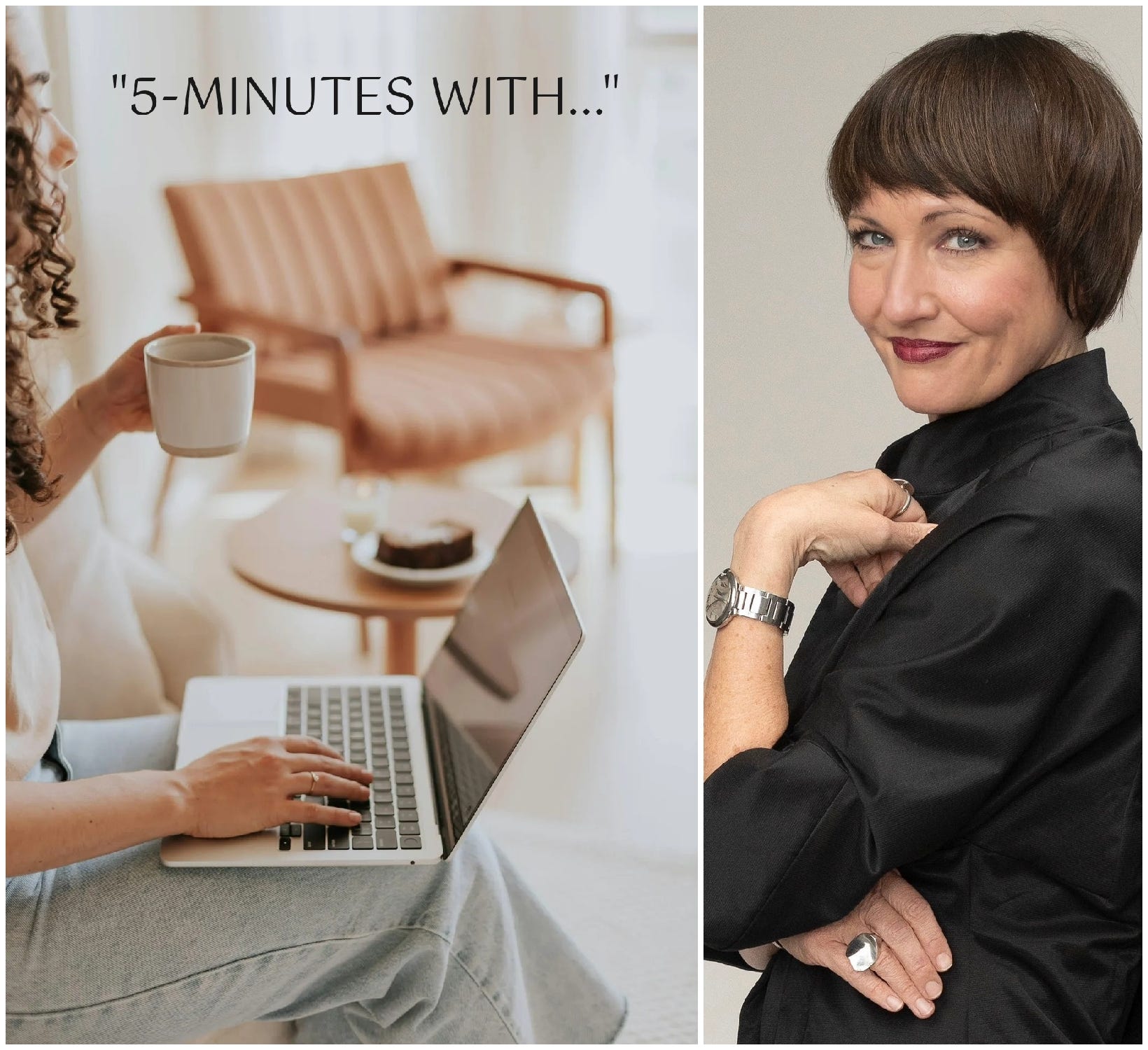
If you’d like to be part of the ‘5 Minutes With…’ series, or you know a woman whose voice would feel like medicine here, email me at hello@kiransinghuk.com. And if you’re reading this thinking, same, tell me in the comments: what are you unlearning in midlife?
As a woman who experienced pre-menopause at 43, I can attest that 33 years later that period (no pun) is just a memory. Menopause is a time of loss. But we are resilient and adaptable.
Thank you for this interview and article, it feels so validating and I'm understanding that listening to body is no longer an option, but also somehow a potential portal to rebirth.